Saturday, May 18, 2024


Israel-Palestine: Examining Islamic Accountability

  
9 mins read
 
People grieve over victims killed in an Israeli airstrike in the southern Gaza Strip city of Rafah, on April 16, 2024. (Photo by Khaled Omar/Xinhua)

ISLAMIC WORLD’S RESPONSIBILITY FOR HORRIFIC INJUSTICE COMMITTED BY ISRAEL

 Does the Islamic World have any responsibility for the incessant and horrific injustice being committed by Israel towards the Palestinian people? Is it because Harry Truman not only recognized Israel as an independent country and as such gave cover to Israeli air space during the short war with Egypt when Anwar Sadat could have given a death blow to Israel but for the US cover of Israeli air space? Lawrence Rees, historian, and author, in his newest book published in March 2024 titled The Holocaust, wrote that “The fundamental precondition for the Holocaust happening was Adolf Hitler,” he explained that “Even as far back as 1921, Hitler said that solving the Jewish question was a central question for National Socialism. And you can only solve it by using brute force.” Hitler had no blueprint for the Holocaust at that point, says Rees. But he did have a pathological problem with Jews. “Hitler believed that something needed to be done,” Rees explains, “and that evolved and changed according to circumstances and political opportunism. “An intriguing part of Rees’s book is his determination to figure out when the collective set of initiatives we now call the Final Solution became official Nazi policy. It’s a question that doesn’t come with a straightforward answer, Rees maintained.

What is clear, though, is that in the summer of 1940, there was still no concrete plan in place for the extermination of Jews. Furthermore, up until that point, Rees argued, the Nazis were still clinging to the belief that in the long term, the way to solve what they called “the Jewish question” was by expulsion and hard labor. At that point, mass murder was still not the preferred option. By the summer of 1942, however, a sea change had taken place. By that time, the Holocaust was in full swing. Therefore, within the previous two-year period, Rees points out, there were several milestones on the road towards mass extermination. But trying to pinpoint an exact moment where the decision was taken to commit to mass killing is very difficult, says Rees — especially since much of the planning was done in secret without written records. Hitherto, many historians, filmmakers, and writers have pointed to a single meeting where plans for the Holocaust were finally decided upon in the power structures of Nazi officialdom. This was known as the Wannsee Conference. It was held in the Berlin suburb of Wannsee in January of 1942 and involved several mid-ranking Nazi officials devising a plot to murder Jews over a shorter timescale and in more efficient ways. But even then, Rees says, no final plans were resolved at the infamous conference. He also points out that key figures from the upper tiers of the Nazi hierarchy — Himmler, Goebbels, and Hitler himself — were not present. “I cannot see how there can have been a decision in 1941,” said Rees. ‘By that stage, you can say a decision to implement what we would now call the Holocaust had been finally decided.

The moment of no return for the Holocaust, said the historian, was in the spring and early summer of 1942 when a decision was taken to kill all of the Jews in the General Government in Poland — a German-occupied zone established by Hitler after the joint invasion by the Germans and Soviets in 1939.“By that stage, you can say a decision to implement what we would now call the Holocaust had been made,” said Rees. Hungary was beautiful to the Nazis, given the number of Jews that resided there. The Jews were transported to Auschwitz between May and July of 1944, where they were murdered. This plan for cold-blooded murder was deviously orchestrated by Adolf Eichmann, who at the time was stationed in Budapest. American scholar Hannah Arendt felt that the presence of Adolf Eichmann was an accident of history and not a deliberate act as Eichmann happened to be at the time he was there and was simply wanted a promotion to a higher post. Hannah Arendt’s explanation was not an apology for Eichmann but a quirk of history. Adolf Eichmann was fully responsible for the crimes he committed and was justly punished.

The Guardian(London) described Palestine as the largest prison in the world an open-air Israel’s sweeping restrictions on leaving Gaza to deprive its more than two million residents of opportunities to better their lives, Human Rights Watch said today on the fifteenth anniversary of the 2007 closure. The closure has devastated the economy in Gaza, contributed to the fragmentation of the Palestinian people, and forms part of Israeli authorities’ crimes against humanity of apartheid and persecution against millions of Palestinians. Israel’s closure policy blocks most Gaza residents from going to the West Bank, preventing professionals, artists, athletes, students, and others from pursuing opportunities within Palestine and from traveling abroad via Israel, restricting their rights to work and education.

Restrictive Egyptian policies at its Rafah crossing with Gaza, including unnecessary delays and mistreatment of travelers, have exacerbated the closure’s harm to human rights. Israel, with Egypt’s help, has turned Gaza into an open-air prison,” Israel and Palestine director at Human Rights Watch. “As many people around the world are once again traveling two years after the start of the Covid-19 pandemic, Gaza’s more than two million Palestinians remain under what amounts to a 15-year-old lockdown.” Israel should end its generalized ban on travel for Gaza residents and permit free movement of people to and from Gaza, subject to, at most, individual screening and physical searches for security purposes. One could imagine the youngsters who grew up in that prison with no rights, driven from their homes while being assisted by the Israeli army to capture what they used to call their homes.

MODERN ADOLF HITLER

Analysts have written volumes that while President Biden championed the merits of democracy during various campaign stops in swing states, former President Donald Trump hosted far-right Hungarian autocratic President Viktor Orbán at Mar-a-Lago and even took him to a concert. Trump’s friendliness with the Hungarian prime minister is likely because Victor Orbán’s central guiding philosophy and preferred method of governing are similar to Trump’s, and could provide insight as to what a second Trump presidency would look like. Like Trump, Orbán is hostile toward immigrants and notably built a massive border fence in the wake of the Syrian refugee crisis to keep asylum-seekers out of Hungary.

His political party, Fidesz, has cracked down on press freedom and has sought to revise textbooks to exclude mentions of the LGBTQ+ community. And most revealingly, Orbán has made changes to Hungary’s government that allow him to stay in power for an extended period. While addressing a crowd at Mar-a-Lago, Trump extolled his leadership style publicly, saying “There’s nobody better, smarter or a better leader than Viktor Orbán, he’s fantastic… He says, ‘This is the way it’s going to be,’ and that’s the end of it. He’s the boss.” The vile reason Hungary’s Viktor Orban is manipulating US politics Trump’s comments caused significant alarm on social media, with journalists, commentators, and elected officials urging voters to pay attention to the former president’s praise of an “autocrat.” “How many different ways does Trump need to tell you he’s going to rule as a dictator before you believe him?” Philadelphia Inquirer columnist Will Bunch tweeted. Former federal prosecutor Richard Signorelli wrote on X/Twitter that Orbán was “Trump’s Mussolini,” suggesting the former president and the Hungarian leader could be the “new Axis powers’ alliance.” “History is repeating itself but outcome not inevitable if we defeat our modern-day Hitler & his deranged MAGA/Nazi cult at [the] ballot box,” Signorelli tweeted.

“Unfortunately, I do not see law enforcement timely addressing the menace so it’s left to us again.” ‘Path to dictatorship’: Columnist says Trump’s ‘thirst for vengeance’ would go unchecked in 2nd term Others viewed the video as an illuminating preview of what Trump hopes to do if he retakes the White House. Sen. Brian Schatz (D-Hawaii) called the former president “the leader of a global fascist movement” and added his role as the catalyst for the global far-right should be seen as the “central historical context of the coming campaign.” Journalist and lawyer Daniel Miller called on the New York Times in particular to publish a “massive headline about Trump wanting to be a dictator” every day until the election. And Sarah Longwell, who is the publisher of the anti-Trump conservative website The Bulwark, urged news outlets to not hold back in calling out Trump’s affinity for far-right dictators. “Just because it’s old news that Donald Trump loves autocrats doesn’t mean it doesn’t deserve wall-to-wall coverage when he does things like this,” she wrote. “Because it’s insane.” Columnist and podcaster Charles Adler tweeted about his firsthand experience with Orbán’s brand of governing, writing that he “destroyed democracy in Hungary – the land of my birth.” “Hungarians of my generation fled for the US and Canada to get the hell away from authoritarianism,” Adler said. “Now this decaying Mar-A-Lago conman is huckstering Hungarian authoritarianism. It’s as if [Russian President Vladimir] Putin is producing this sideshow.

” US-CHINA STRUGGLE FOR A SO-CALLED PLACE IN “RULE-BASED” TABLE RULING THE WORLD

 During the Cold War, most national governments in Eastern Europe and some in Asia were led by a single political party. In many cases, these regimes evolved into totalitarian systems that exercised total control over their societies. In other cases, the role of the secret police was more relaxed, and citizens did not face constant surveillance. Single-party regimes are led by a hegemonic party with a strong grip on power. Although only one leader is officially in charge, many political elites must work together to form and execute governmental policies.

Classic examples of single-party rulers include the Chinese Communist Party, the Vietnamese Communist Party, and the People’s Action Party of Singapore. Studies have noted that single-party systems tend to perform much better in terms of economic growth and development than personalistic or military-junta systems. The emphasis on consensus in policymaking ensures that policy output is not erratic or predicated on the whims of the dictator. Monarchies are led by a ruling family and operate in ways similar to those of a single-party regime, with many individuals participating in the discussion, consultation, and decision-making processes. For this reason, the policy output of monarchies has tended to be predictable as well, making monarchies—like single-party regimes—one of the most durable forms of rule.

During the Arab Spring beginning in 2010–11, for example, the republics in Libya, Yemen, and Egypt were all overturned, while the monarchies faced protests but never wavered. The stability of authoritarian rule in the Middle East led to studies searching for explanations of how regimes that have a relatively well-off population can prevent the rise of a disgruntled middle class pushing for democratic rights and representation. The answer for some scholars was the regimes’ possession of certain valuable natural resources, which resulted in huge “rents.” Rents constitute revenues that go directly to a government without the need for stimulating productivity or collecting taxes. They include foreign aid and funds from the sale of natural resources such as oil, natural gas, and diamonds. Many oil-rich countries use oil rents to pay off elites and the public, thereby ensuring that they remain apolitical. Instead of investing in citizens, taxing them, and representing their interests, the regime effectively co-opts them. Oil revenues in particular have been used to strengthen the state’s repressive institutions, thereby ensuring that there are no challenges to the status quo.

A few decades earlier, the growth of an educated middle class, along with pressure from students and labor, led to an increase in the number of democracies during what the American political scientist Samuel Huntington (1927–2008) referred to as the “Third Wave.” Additional weak autocracies collapsed when they ceased to receive financial support from either of the two superpowers. The press is another target of authoritarian regimes. Although it is not usually completely owned by the state, journalists and media outlets face limits on what they can say and how critical of the government they can be. Failure to respect such boundaries can result in imprisonment, harassment, threats, fines, or revocation of operating licenses.

In other cases, the regime simply ensures that major media outlets are captured by cronies—who are willing to supply pro-regime content—as in Hungary under Prime Minister Victor Orban. Authoritarian regimes today also incorporate legislatures, political parties, and judiciaries, but those institutions do not have much power, if any. A legislature may exist, but it is filled with political lackeys who never vote against the leader. While it is true that what are called “electoral autocracies” allow some opposition within legislatures or a limited level of judicial independence, such practices are usually just a democratic facade designed to maintain the regime’s domestic and international legitimacy.

DO MOST COUNTRIES HAVE MORE EXPERIENCE THAN DEMOCRACY? IS IT BECAUSE AUTHORITARIAN DICTATORS CAN REACH THE ESSENTIALS TO THE NEEDY FASTER THAN DEMOCRATS?

 Most countries have had less experience with democracy than with autocracy. In the early 21st century, survey research in Russia found that nearly 60 percent of all adults took a positive view of the Soviet dictator Joseph Stalin, while only about 20 percent held a similar opinion of the reforming president Mikhail Gorbachev. Digital authoritarianism” Authoritarian regimes in the 21st century have tapped into the fears of citizens in new and old democracies, posing a massive threat to democratic systems. For example, Russia and other authoritarian countries have used the Internet to spread disinformation designed to widen political divisions within democratic countries and to undermine public faith and trust in democratic institutions. Republican opponent, Donald Trump, who unexpectedly won the election.

Few countries have been able to maintain a system of digital authoritarianism as sophisticated and technologically advanced as that of China. At the turn of the 21st century, China began work on a digital infrastructure that would prevent its citizens from accessing information that could destabilize its government. Known outside China as the Chinese Firewall (and inside China as the Golden Shield), the infrastructure incorporated a centralized system of Internet traffic choke points that enabled the government to prevent domestic Internet users from accessing websites based in other countries and to limit access to Chinese websites by foreign Internet users. The threats of authoritarian rule to democracies are substantial. Most people live in nondemocratic systems. Nevertheless, although authoritarianism has been resurgent in many countries, these changes are not likely to be permanent.

Saturday, May 4, 2024

Print

China-Russia “Limitless” Freindship

By Kazi Anwarul Masud
Issue:  Net Edition    | Date : 27 Apr , 2024

Alexander Gubaev on China-Russia Limitless Friendship

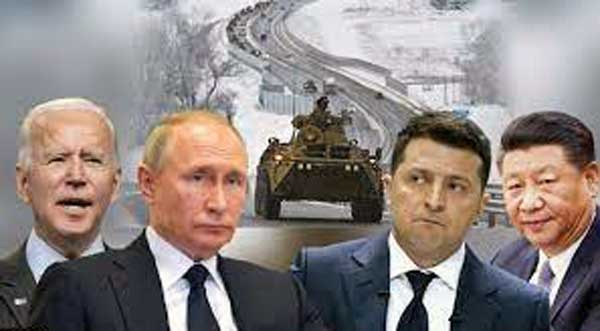
Alexander Gubaev, an expert on Russian affairs, not only termed the China -Russia  alliance “unholy” but he also cast doubt –‘Why the West Won’t Be Able to Drive a Wedge Between Russia and China’ ( April 2024). China and Russia are more firmly aligned now than at any time since the 1950s. The tightening of this alignment between Russia and China is one of the most important geopolitical outcomes of Putin’s war against Ukraine. The conscious efforts of Xi Jinping and Vladimir Putin drive much of this reorientation, but it is also the byproduct of the deepening schism between the West and both countries. Western officials cannot wish this axis away.  Instead, the West should be prepared for an extended period of simultaneous confrontation with two immense nuclear-armed powers.  In a joint statement issued on February 4, 2022, Putin and Xi described ties between their two countries as a “partnership without limits.” That phrase won a lot of attention in the West, especially after Putin invaded Ukraine just 20 days later.

History of China-Russia Partnership

Yet the deepening partnership was not born in February 2022. Following the bitter estrangement of the Sino-Soviet split that spanned the 1960s to the 1980s, China and Russia have become closer for several pragmatic reasons. Both sides wanted to make the territorial conflict between them a thing of the past, and by 2006, their 2,615-mile border had finally been fully delimited. Economic complementarity also drove them together.   And as Russia grew increasingly authoritarian with Putin in charge since 2000, Beijing and Moscow teamed up at the UN Security Council, using their power as permanent members to push back against many of the positions and norms advocated by Western countries, including the use of sanctions against authoritarian regimes and U.S.-led pressure campaigns in regional hot spots such as Syria. China and Russia have also long shared a distrust of the United States, seeing Washington as an ideology-driven global hegemon that wants to prevent Beijing and Moscow from taking their rightful places in leading the world order and, even worse, that aims to topple their regimes.

Russia-China growing freindship and Ukraine War

Russia and China’s growing closeness is one of the most important outcomes of the war in Ukraine.  Since Xi’s state visit to Russia in March 2023, Russian Prime Minister Mikhail Mishustin and senior members of his team have traveled to China several times.  Throughout 2023, many senior Russian officials and CEOs of the largest state-owned and private companies shuttled to and from China. Senior Chinese leaders—especially those from the military and security sectors—have also made trips to Russia. Russian Foreign Minister Sergei Lavrov visited Beijing for talks with his Chinese counterpart Wang Yi. It is notable that this traffic is mostly one-sided—senior Russian officials and business leaders are going to China much more frequently than their Chinese counterparts going the other way, a clear indication of Russia’s desperate need for China. The one exception is the military-security domain, where the visits of high-ranking officials have tended to be symmetrical and reciprocal.

Independent opinion polls suggest Russians View China Positively

The overall warming of attitudes to China is reflected in opinion polls, too, including recent data produced by the joint efforts of the Carnegie Endowment and the Levada Center, the independent Russian polling organization. At the end of 2023, 85 percent of Russians viewed China positively, where as only six percent had a negative opinion of the country.

How Russia assesses relationship with Foreign Powers

The Kremlin now assesses every relationship with a foreign power through a lens of three essential considerations: whether this relationship can help Russia directly on the battlefield in Ukraine, whether it can help sustain the Russian economy and circumvent sanctions, and whether it can help Moscow push back against the West and punish the United States and its allies for supporting Kyiv. Russia’s relationship with China emphatically checks all three boxes. Beijing is not providing direct lethal aid to Moscow in Russian invasion of Ukraine but China’s indirect support for the Russian war effort is indispensable. On the economic front, Putin’s war chest relies heavily on revenue from Chinese purchases of Russian exports. The clearance of payments in the Chinese yuan keeps the Russian financial system afloat, and imports of cars, electronics, and other consumer goods keep shops well stocked and ordinary Russians quiet. More telling, however, is Russia’s decision to firmly align with China in its geopolitical contest with the United States.

Moscow and Beijing do not want formal Military Alliance

Moscow and Beijing do not want to sign a formal military alliance, as senior officials on both sides have reiterated multiple times. Neither wants to have a legal obligation to fight for the other and be dragged into an unnecessary conflict. Still, two large nuclear powers that are on friendly terms standing back-to-back on the giant Eurasian landmass is a major headache for Washington. With the collapse of global nuclear arms control regimes and China’s rapid nuclear buildup, U.S. strategists will face tough choices about resource allocation: The United States will need to develop a strategic nuclear force that can at the same time deter two partnered rivals with vast nuclear arsenals.

China-Russia consider US as the Prime Enemy

A de facto nonaggression pact between China and Russia, and the countries’ shared perception of the United States as an enemy, could lead to increased coordination between the European and Asian theaters, further stretching U.S. resources and attention.  Putin’s anti-Western rhetoric that defines his invasion of Ukraine both as a rebellion against U.S. hegemony and “neocolonial practices” and as a bid to build a “more just multipolar world order” fails to convince the countries of the diverse global South (a group Putin grandiosely claims to represent), many of which look askance at Russia’s blatant disregard for Ukraine’s sovereignty and international law. The problem for the West is that many countries perceive its leader, the United States, to be just as cynical as Russia, thanks to Washington’s checkered legacy of interventionism and selective respect for international law.

Russia wants to replace its reliance on the West

Russia is on its way to replacing near total reliance on the West with reliance on China; it stayed afloat and has been able to wage an expansive war against a large country backed by NATO. Other countries wary of dependence on the West now see how Beijing can be a ready source of technology and payment settlement mechanisms, as well as a giant market for commodities producers. This is the most significant contribution of the Chinese-Russian alignment to the remaking of the global order. Moscow and Beijing may never sign a formal alliance, but the evolution of their relationship in the years ahead will increasingly affect the world and challenge the West. To come to terms with this development, Western policymakers should abandon the idea that they can drive a wedge between Beijing and Moscow.

US attempts to Dilute China-Russia Freindship

Under Trump, the National Security Council entertained the idea of a “reverse Kissinger” approach of engaging Russia, the weaker partner, but to no avail. Whereas former Secretary of State Henry Kissinger courted communist China during the Cold War by offering Beijing a normalization of ties with the United States, U.S. officials cannot extend a deal of that sort to either Moscow or Beijing at this point. Any hopes of peeling them away from each other are nothing more than wishful thinking. Certainly, the Sino-Russian relationship is not without its strains, and existing tensions may be exacerbated as China grows more confident and is tempted to start bossing around the Russians in a more heavy-handed way—something that no ruler in Moscow would take lightly. For now, however, Beijing and Moscow have demonstrated a remarkable ability to manage their differences.

Conclusion

If the China-Russia tandem is here to stay, Western leaders must build a long-term strategy that will help maintain peace by accounting for all the ramifications of having to compete with China and Russia simultaneously. For a start, the West will need to find the right balance between deterrence and reassurance with Moscow and Beijing to avoid dangerous escalatory situations that could arise from accidents, misperceptions, and miscommunication. Western governments should consider the second-order effects of the coercive economic measures they have applied to Russia and China and how retaliatory countermeasures further erode the fabric of globalization. And while they should not tolerate Russian and Chinese disinformation and attempts to subvert the functioning of international institutions, Western countries should seek to make some of these institutions, such as the United Nations and its related agencies, functional again even with Beijing and Moscow on board. When considering how to protect European and Asian security, rein in climate change, govern new disruptive technologies such as artificial intelligence, and address the challenges facing global financial architecture, Western policymakers must now reckon with the reality of an increasingly resolute Sino-Russian axis.


With Navatny Dead Does Putin Have Any Red Lines?

Putin’s ruthlessness at home and his aggression abroad are difficult to fathom on his next move and how he intends to wrap up the Pandora's Box.

  
5 mins read
 
Yulia Navalnaya, widow of Alexei Navalny

VLADIMIR PUTIN’S “RED LINE” TO WESTERN POWERS

In April 2021 Russian President Vladimir Putin sternly warned the West against encroaching further on Russia’s security interests, saying Moscow’s response will be “quick and tough” and make the culprits feel bitterly sorry for their actions. The warning came during Putin’s annual state-of-the-nation address amid a massive Russian military buildup near Ukraine, where cease-fire violations in the seven-year conflict between Russia-backed separatists and Ukrainian forces have escalated in recent weeks. The United States and its allies have urged the Kremlin to pull the troops back. “I hope that no one dares to cross the red line concerning Russia, and we will determine where it is in each specific case,” Putin said. “Those who organize any provocations threatening our core security interests will regret their deeds more than they regretted anything for a long time.”

MOSCOW REJECTS WESTERN CONCERN REGARDING UKRAINE

Moscow has rejected Ukrainian and Western concerns about the troop buildup, saying it doesn’t threaten anyone and Russia is free to deploy its forces on its territory. But the Kremlin also has warned Ukraine against trying to use force to retake control of the rebel-held east, saying Russia could be forced to intervene to protect civilians in the region. “We really don’t want to burn the bridges,” Putin said. “But if some mistake our good intentions for indifference or weakness and intend to burn or even blow up those bridges themselves, Russia’s response will be asymmetrical, quick, and tough.”As Alexey Navalny’s health is deteriorating, Magnitsky campaigner Bill Browder says countries who are hesitant to levy sanctions on Russian oligarchs and put pressure on President Putin, are “cowards”. As Putin spoke, a wave of protests started rolling across Russia in support of imprisoned opposition leader Alexei Navalny, and a human rights group said nearly 1,500 people were arrested. Thousands marched in central Moscow, where police blocked off a square next to the Kremlin. Police in St. Petersburg blocked off Palace Square, outside the Hermitage museum, and protesters instead massed along Nevsky Prospekt. The politician, who is Putin’s most persistent critic and was poisoned with a chemical nerve agent last year, started a hunger strike three weeks ago to protest what he said was inadequate medical treatment and officials’ refusal to allow his doctor to visit him. His supporters called the rallies as his health reportedly is in severe decline. Weapons development.

PUTIN DECLARES RUSSIA’S INTENTION TO MODERNIZE ITS NUCLEAR ARSENALS

In his speech, Putin pointed to Russia’s moves to modernize its nuclear arsenals and said the military would continue to procure a growing number of state-of-the-art hypersonic missiles and other new weapons. He added that the development of the nuclear-armed Poseidon underwater drone and the Burevestnik nuclear-powered cruise missile is continuing successfully. In an apparent reference to the U.S. and its allies, the Russian leader denounced those who impose “unlawful, politically motivated economic sanctions and crude attempts to enforce its will on others.” He said Russia has shown restraint and often refrained from responding to “openly boorish” actions by others. The U.S. ordered 10 Russian diplomats expelled, targeted dozens of companies and individuals, and imposed new curbs on Russia’s ability to borrow money. Russia retaliated by ordering 10 U.S. diplomats to leave, blacklisting eight current and former U.S. officials, and tightening requirements for U.S. Embassy operations. “Russia has its interests, which we will defend in line with the international law,” Putin said during Wednesday’s address. “If somebody refuses to understand this obvious thing, is reluctant to conduct a dialogue and chooses a selfish and arrogant tone, Russia will always find a way to defend its position.”

PUTIN CHASTISES THE WEST FOR TAKING DEFIANT STANCE TOWARDS RUSSIA

 In an emotional outburst, Putin chastised the West for taking a defiant stance toward Russia. In an apparent reference to the U.S. allies, he compared them to Tabaqui, a cowardly golden jackal kowtowing to Shere Khan, the tiger in Rudyard Kipling’s The Jungle Book. “They howl to please their lord,” he said. Russia this week engaged in a tense tug-of-war with the Czech Republic following Prague’s move to expel 18 Russian diplomats over a massive Czech ammunition depot explosion in 2014. Moscow has dismissed the Czech accusations and retaliated by expelling 20 Czech diplomats. Putin also harshly criticized the West for failing to condemn what he described as a botched coup attempt and a failed plot to assassinate Belarus’s president, Alexander Lukashenko, allegedly involving a blockade of the country’s capital, power cuts, and cyberattacks. “The practice of organizing coups and planning political assassinations of top officials goes over the top and crosses all boundaries,” Putin said, drawing parallels to plots against Venezuelan President Nicolas Maduro and the popular protests that led to the ouster of Ukraine’s former Russia-friendly president, Viktor Yanukovych, in 2014. Russia responded to Yanukovych’s ouster by annexing Ukraine’s Crimean Peninsula and throwing its support to the separatists in the country’s east. Fighting there has since killed more than 14,000 people and devastated the industrial heartland.

IS THERE ANY RATIONALE FOR PUTIN’S “RED LINE” NOW WITH NO OPPOSITION?

On February this year and opposition leader Navalny dead, does Putin have any red lines? There is alarm about the Kremlin’s recklessness but, after two years of war, sanctions are struggling and faith in Ukraine’s ability to defeat Russia is ebbing • Katherine Butler If the death of Alexei Navalny was a shocking message from Vladimir Putin to the already cowed Russian opposition, it has dramatically refocused Europe’s attention on the war in Ukraine and the threat Putin represents beyond Russia’s borders. Outrage is matched by a new sense of alarm. Not only does Putin appear unassailable in a Russia where the space for dissent has shrunk to nothing. But Navalny’s treatment suggests that Putin has no red lines as he seeks to win in Ukraine – which he now regards as a war with the West. Navalny’s widow, Yulia, took her husband’s struggle directly to Europe’s leaders and the global defense community in Munich and Brussels. Her moral authority probably influenced the tone of a joint EU statement pinning Navalny’s death on Putin.

EU SANCTIONS AGAINST RUSSIA CONTINUES   

Beyond accusing him of “slow murder” and summoning Russia’s diplomats, however, Europe has little obvious leverage. Germany has proposed new EU sanctions. But 12 rounds of EU sanctions have already been imposed since the invasion of Ukraine in February 2022 and a 13th round was approved recently. The UK is including bosses of the Arctic penal colony where Navalny died in its sanctions package. Critics say such measures have proved symbolic and easy to dodge: efforts to make Russia an international pariah have had limited success. Could a sense of Western panic about Ukraine’s defeat in the wake of Navalny’s death translate into more urgency – and unity – about arming Ukraine? Russia made its biggest battlefield gain since May last weekend with the fall of the city of Avdiivka. Ukraine blames its allies’ failure to supply it with enough ammunition and weapons to halt Russia’s progress. Putin by contrast has turned Russia into a “Kalashnikov economy”. Relentless propaganda ensures he controls the war message within Russia. A new 10-year bilateral security pact with Ukraine underlines the shift in Berlin’s direction.

WESTRN COALITION SPLIT ON SUPPORT FOR UKRAINE

Yet, Olaf Scholz’s coalition is split over sending Taurus long-range cruise missiles, which could allow Ukraine to strike behind Russia’s lines. Germany and France are also not seeing eye to eye on how to manage support for Ukraine. French officials told Patrick Wintour that poor coordination and incompatibility were bigger problems than the “billions” spent on weapons. Worryingly for those who believe that arming Ukraine is the best hope of stopping Putin, there has been a significant shift in European public sentiment about the war.

CONCLUSION

According to exclusive new survey data, barely 10% now believe Ukraine can defeat Russia militarily. A “compromise settlement” is seen as the conflict’s most likely outcome. A year ago, most people said Ukraine must regain all its territory.  Sheer fatigue, low morale, and trepidation is the present situation in Ukraine. More than 6.4 million Ukrainians fled the country in search of safety and 3.4 million are internally displaced. There was little love lost between Alexei Navalny and Ukraine, where his failure to condemn the annexation of Crimea drew anger. But an analyst argued for Guardian opinion that the Russian opposition’s greatest hope could lie in Ukraine. Putin’s ruthlessness at home and his aggression abroad are difficult to fathom on his next move and how he intends to wrap up the Pandoras Box.