Friday, December 30, 2022

Is Democracy On The Wane? – OpEd

By 

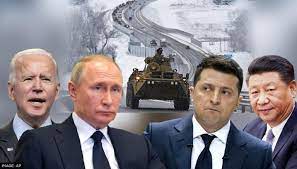
The Russian invasion of Ukraine coupled with Chinese muscle flexing comparable to a superior Power demonstrating the capacity of illiberalism to deliver goods to the needy more quickly than the democratic countries can do is an eye opener. Illiberal regimes can do because for example Xi Jin Ping’s Communist Party of China that controls every facet of Chinese life is totally different from democracies where the peoples’ consent has to be taken. The recent elections in the US Congress and Senate is a shinning example where House of Representative Speaker Nancy Pelosi’s visit to Taiwan could not be stopped by President Biden as Xi-Jin-Ping’s illiberal regime could not be convinced that Nancy Pelosi because the House and the Senate and the Presidency had their own rules beyond which they cannot operate. Ukraine and Taiwan have cemented relations between Russia and China which did not exist before. 

DEMOCRACY FROM GREECIAN AGE

Democracy has travelled a long path. Aristotle’s Athens was the first known to have practiced democracy. In reality, Athens was not a true democracy as women were not included nor were foreigners, slaves or freed slaves. Also, according to the rules of citizenship both parents must have been Athenian citizens for a person to qualify to take part in the Assembly. The democracy therefore, was only a very small minority of the people living in Athens.

It was, however, the closest any country had come to establishing a democratic society at this time ( Pravesh Agarwal– The Growth of the Concept of Democracy: An Analysis  November 16-2014). In his long treatise Agarwar cites L.R.Lowell, Abraham Lincoln, Albert Venn Dicey,  was a British  jurist and constitutional theorist. He is most widely known as the author of Introduction to the study of the law of the Constitution ( Wikipedia) (1885). The principles he  expounded are considered part of the uncodified British Constitution.He became Professor  at Oxford and a leading constitutional scholar of his day. Both Dicey  and Lord Bryce  emphasized why democracy should remain the best possible method of governance. Skipping the evolution of democracy through the ages its relevance has surfaced due to recent events that have shaken the world in many ways. Can the world ignore the Russo-China entente cordiale being shown around as more efficient than democratic system which takes time to deliver goods to the needy.

AUTHORITARIANISM  VIS-À-VIS DEMOVRACY

 This authoritarian system totally ignores that in democracy the will of the people is taken into consideration, and the dictates of the Communist Party Of China(CCP) taking China as an example, is not final. While President Putin has some critics at home and he has to pacify the inner coterie of his supporters Xi Jin-Ping has already got rid of the most literate group of people Deng Xiaoping had as his closest advisors and Xi Jin-Ping is already called by his critics as “Emperor” of China.”

World Press Review in a comparison between the two leaders writes  “ Xiang Jemin’s his political career included many consequential milestones that shaped the relationship between China and the United States, as well as international affairs more broadly. In addition to overseeing a period of vast economic growth, Jiang presided over a China that opened up to the world, including the peaceful handover of Hong Kong from the United Kingdom in 1997 and China’s entry into the World Trade Organization four years later. Relations between Washington and Beijing also took a dramatic turn during the Jiang era. In particular, 1999 was a pivotal year for China’s engagement on the world stage as well as for the kind of contemporary, bombastic nationalism that is now commonplace in domestic affairs.

That year, US bombers carrying out NATO air strikes against the Yugoslav military in response to Belgrade’s ethnic cleansing of Kosovar Albanians struck the Chinese Embassy in Belgrade.   Three Chinese journalists were killed in the strike, which drew outrage from Beijing. Jiang’s response to the bombing and the sense of betrayal and alienation felt by Chinese observers across the political spectrum still reverberate, manifesting themselves in the more hawkish forms of Chinese nationalism on display today. The Jiang era, as well as that of his successor, Hu Jintao, might have been characterized by China’s entry into the WTO, a consolidation of the economic partnership between the U.S. and China.  

But it is important to remember that this openness occurred simultaneously with the crystallization of China as a society that asserts its sovereignty. And Jiang was a central architect of that crystallization. The Jiang era is also seen as having accelerated the sweeping trend toward the globalization of China’s economy. Beijing’s entry into the WTO marked its deepened commitment to the “socialism with Chinese characteristics” that has defined its economic framework to this day But the liberalization on display in the economic realm did not extend to security matters.

Fears of containment by the U.S. and the emergence of a new Cold War was already on display among hardliners like Liu Mingfu, a retired PLA officer and commentator who once described the 1999 bombing of Chinese Embassy in Belgrade as “totally intentional” and “a purposeful, planned bombing, rather than an accident.” Jiang, too, used muscular language to describe China’s engagement on the world stage. He once boasted of quashing “farcical” U.S. plans at the United Nations, dismissing Washington’s use of the organization to criticize Beijing’s human rights record as a pretext for isolating China diplomatically. 

EMERGENCE OF ‘WOLF WARRIOR

The term “wolf warrior,” referring to the aggressive style of public diplomacy increasingly favored today by Chinese diplomats, gained currency in the years after Jiang left power, but the colorful language that regularly accompanies their sharp-elbowed diplomatic tactics had its roots in the Jiang era. When Jiang stepped down from leadership of the CCP in 2002, Xi Jinping had not yet reached the top echelon of the party’s hierarchy.

But there is no doubt that Xi and his cohorts were significantly influenced by the nationalistic rhetoric and framing of an undefeatable China that was commonplace during the Jiang era. At a time when Xi constantly calls for the rejuvenation of the Chinese nation and people, the juxtaposition of China with the U.S. is more ideologically charged than ever.” It is almost axiomatic that when global powers start to become powerful they start to flex their muscle as has been the case with Chinese military intrusion in South China Sea parts of which is also claimed by Vietnam, Brunei, Indonesia, Malaysia, Thailand, Philippines, Cambodia and Taiwan. 

Importance of South China Sea 

South Sea China is a very  significant body of water in a geopolitical sense. The sea has historically been an important trade route between China, southeast Asia, and going to India and the west. Today it is the second most used sea lane in the world, while in terms of world annual merchant fleet tonnage, over 50% passes through the Strait of Malacca and other straits.  Over 1.6 million 10 million barrels of crude oil a day are shipped through the Strait of Malacca.

On many occasions China has militarily intruded into the area and has built artificial islands. Protests by the involved countries  and the Western powers have been ignored. In 2013, the Philippines raised the dispute with China to the PCA(Permanent Court Of Arbitration), saying China’s claims violated Philippines’ sovereignty under the 1982 U.N. Convention on the Law of the Sea (UNCLOS).The Permanent Court of Arbitration ruled that Chinese claims over 90 percent of the South China Sea area are illegitimate and under UNCLOS, China is intruding into the Philippines’ sovereign waters.   China out rightly rejected the ruling. China prefers bilateral negotiations with the other parties. But many of its neighbors argue that China’s relative size and clout give it an unfair advantage.  

THUCYDIDE TRAP IN MODERN ERA

Indian analyst Amitabh Matto referring to Harvard political scientist Graham Allison’s reference to Thucydides Trap “captured the essence of the challenge posed to the United States by a rising China. The study revealed that over the past 500 years, in 12 out of 16 cases ‘in which a rising power has confronted a ruling power’, the result was war. ‘When the parties avoided war, it required huge, painful adjustments in attitudes and actions on the part of not just the challenger but also the challenged.’

For Allison, the defining question about global order for this generation is whether China and the United States can escape Thucydides’ Trap. The Greek historian’s metaphor reminds us of the attendant dangers when a rising power rivals a ruling power—as Athens challenged Sparta in ancient Greece, or as Germany did Britain a century ago.8 While the debate on the dilemmas posed by a rising China predated Allison’s study, the responses can be slotted along familiar Manichean lines of ‘accommodation’ by doves or ‘containment’ by hawks9—or, for Alastair Iain Johnston, ‘skeptics’ versus ‘engagers’”. Allison in his book Destined for War explains why Thucydides’s Trap is the best lens for understanding U.S.-China relations in the twenty-first century.

Through uncanny historical parallels and war scenarios, he shows how close we are to the unthinkable. Yet, stressing that war is not inevitable, Allison also reveals how clashing powers have kept the peace in the past — and what painful steps the United States and China must take to avoid disaster today. Unfortunately for the world Xi-jinPing’s inexperience of how the US and then USSR had handled the Cold War, German Chancellor Helmut Kohl and the US acceptance of Russian hegemony of East Germany and now coupled with Ukraine conflict makes Allison book an important guideline for the everyone. In this melee of conflicts there are numerous incidents of India-Pakistan and India-China border disputes. 

SINO-INDIA CONFLICTS

The border between China and India is disputed at multiple locations. “There is “no publicly available map depicting the Indian version of the LAC,” and the Survey of India maps are the only evidence of the official border for India. The Chinese version of the LAC mostly consists of claims in the Ladakh region, but China also claims Arunachal Pradesh in northeast India. Since the 1980s, there have been over 50 rounds of talks between the two countries related to these border issues. Only 1 to 2 percent of border incidents between 2010 and 2014 had received any form of media coverage. 

In 2019, India reported over 660 LAC violations and 108 aerial violations by the People’s Liberation Army which were significantly higher than the number of incidents in 2018. Despite the disputes, skirmishes, and standoffs, no incidence of gunshots being fired had been reported between the two countries along the border for over 50 years, due an agreement by both sides that guns were not to be used; however, this changed on 7 September, when warning shots were fired. During Xi Jinping ‘s visit to New Delhi in September 2014, Indian Prime Minister Narendra Modi discussed the boundary question and urged his counterpart for a solution. 

Since Modi became Prime Minister in 2014 until the 2020 standoff, Modi and Xi met 18 times, including those on the sidelines of summits and five visits to China.[88] However, in 2017, China and India were involved in a major standoff in Doklam that lasted for few months.  On 3 January 2018, Xi Jinping, as Chairman of the Central Military Commission, issued the first Training Mobilization Order. This was the first time that military training instructions had been given directly by the Chairman of the Central Military Commission. Following this, PLA forces have been mobilizing training on the basis of the order. Improving combat readiness is now a strategic mission for the Chinese military … China can’t copy the US’ measure to improve combat capability through actual combat overseas since our national defense policy is defensive rather than offensive. Therefore, military training becomes extremely important for China.” (wikipedia).  China has since increased its military presence in the Tibetan Plateau. China has also been increasing its footprint with India’s neighbors – Nepal, Sri Lanka and Pakistan to arrest India having a monopoly in the region, China is now posing a direct challenge to New Delhi’s influence in South Asia. Inia-Pakistan conflicts came to the fore ever since the British left the sub-continent in 1947. Pakistan had never a democracy as opposed to Indian practice of democracy since independence from the British. 

CONCLUSION

In recent time for the first time in Pakistan’s history Prime Minister Imran Khan was deposed by the Parliament reportedly at the behest of the army. Consequent was the appointment of General Syed Asif Munir who was disliked by Imran Khan who dismissed him from the post of Director General of Forces Intelligence. General Syed Asif Munir’s return as Army Chief does not necessarily mean a peaceful Pakistan. On the contrary Imran Khan’s determination to return to power through the next election is a distinct possibility if Punjab Assembly elections is any indication where Prime Minister Shabaj Shari’s Pakistan Peoples Party got only a few seats. One can only hope that Pakistan will see a peaceful transfer of power after the next elections  if the elections are allowed to be held at all.

Friday, December 16, 2022

 Print

Pakistan has a new Chief of Army Staff

By Kazi Anwarul Masud
Issue:  Net Edition    | Date : 10 Dec , 2022

Replacement of Imran Khan as Prime Minister

General Syed Asif Munir was reportedly the consensus candidate for the post of Chief of Army Staff. His appointment was however preceded by chaos caused by the replacement of Imran Khan as Prime Minister by some coalition partners who were accused by Imran Khan as having been encouraged by the army to desert him and consequent loss of majority in Parliament! Imran Khan’s ouster as Prime Minister was a unique event in Pakistan’s history as he was the first PM to be replaced by the Parliament and not by the army. From the days of Ayub Khan (1958-1961) army had always played a vital role in Pakistani politics and still does. Foreign policy effectively remains the army’s preserve.

The Ministry of Foreign Affairs is basically a spokesperson for the army. It would be erroneous to think that differences exist between the army and the Foreign Ministry. Both are viciously anti-Indian and pro-Islamic in their attitude. Official military spending of Pakistan is 7 percent of GDP but in reality, it more than 10 percent, almost 70 percent of Karachi stock exchange is military industrial complex.  Military service is the only major source of good middle- and high-income jobs hence it’s an aspiration. For e.g. the amount of land army officers get as they keep rising above the ranks is incredible. The separation of “Mullah” (or Taliban) even in the General ranks is non-existent, no Civilian and Judiciary can be overridden by Military. Pakistani military recruitment is extensive and covers all regions of Pakistan and is very good at training personnel according to its ideology. Nothing wrong in it since that’s the way of the world. Pakistani primary ideology involves competing/fighting with India. For e.g. in spite of loss in all four wars (one of them resulted is formation of Bangladesh) it continues to fight as it considers not fighting as a  defeat. As long it fights it considers a  victory.

Imran Khan and General Asif Munir

General Asif Munir’s carrier received a jolt when Imran Khan removed him from the post of DGFI for reasons not revealed in public. With the removal of Imran Khan as PM, Shabaj Sharif who became Prime Minister in consultation with his elder brother Nawaz Sharif who is under conviction for corruption and can only return to Pakistan if his appeal to the Supreme Court is upheld that without army’s blessings is unlikely to happen. New Army Chief has another distinction. He graduated not from the Military Academy but rose from the ranks to the rank of Lieutenant General which testifies to his brilliance. General Asif Munir also had the good fortune to work under General Qamar Javed Bajwa whose term ended in November. Besides General Bajwa had declared that he would not seek another term, a declaration that went in favor of Sharif brothers as General Bajwa and Imran Khan were not on good terms. Consequently, when Shahbaj Sharif recommended to the President of Pakistan that General Asif Munir be appointed as the Army Chief the President though a member of Imran Khan’s political Party-Tehrik-e-Insaf was constitutionally bound to appoint General Asif Munir as Army Chief. Rana Bannerji, one of India’s expert of Pakistan army brought out some anomalies in the appointment of General Asif Munir. According to Bannerji, General Asim Munir had joined the army through Pakistan’s Open Training Service (OTS). Imran Khan pleaded in front of PM Shahbaz to appoint the new Chief of Pakistan Army! General Munir of the Frontier Force Regiment is the senior-most three-star general and a favorite of General Bajwa. When General Bajwa was the commander of X Corps, then Lt. General Munir was posted there as a Brigadier. In the year 2017. General Bajwa made him the Director General of Military Intelligence, and within a year he also became the Chief of ISIA. But after eight months, he was removed from this post at the behest of the then PM Imran Khan.

The reason was General Munir’s disclosure of corruption by the wife of Imran Khan. Besides, according to Bannerji, two controversies surround General Munir’s appointment. First, the fact he was to retire on November 27 and General Bajwa, was to retire on November 29. Second, the role General Munir played during his brief stint as DG ISI, exposing allegations of corruption surrounding Imran Khan’s wife Bushra Sheikh. Banerji explains why Nawaz Sharif is said to be close to General Munir. He also discusses how General Munir is likely to respond to Imran Khan’s long march, which was due to culminate in a major rally in Rawalpindi/Islamabad on November 26. He also answered the question of how the new Army chief would respond if the Sharif government calls on the army to control the situation in the event there’s violence at Imran Khan’s Islamabad rally. Now that General Asif Munir has been appointed Army Chief it is difficult to assume a peaceful Pakistan.

Imran Khan’s march to Rawalpindi and his declared revenge against General Bajwa reported conspiracy along with the US support to oust Imran Khan (totally denied by the US embassy in Islamabad) does not augur well for a peaceful resolution of the conflict before the general election that is knocking at the door. Prime Minister Shabaj Sharif has to be reminded of his party’s dismal performance in the Punjub assembly elections in which Imran Khan’s Tehrik-e-Insaf Party won almost all the Assembly seats while Shabaj Sharif,s Pakitan Peoples Party won only a few seats. Punjab has been in the past the unassailable fort of the Sharif brothers while Imran Khan hails from the North West Frontier Province. Despite internal conflict in Pakistan the US cannot afford to ignore Pakistan and vice-e-Versa. US needs Pakistan in its fight against the Sino-Russian alignment despite India’s long-standing relationship with then USSR in particular then USSR’s repeated veto during the liberation war of Bangladesh. India from its freedom from the British Raj in 1947 has been following non-aligned foreign policy under Prime Minister Pandit Nehru who along with Kwame Nkrumah of Uganda and President Sukarno of Indonesia were leaders of the Non-Aligned Movement.

Friday, December 2, 2022


Modern Diplomacy in a Complex World

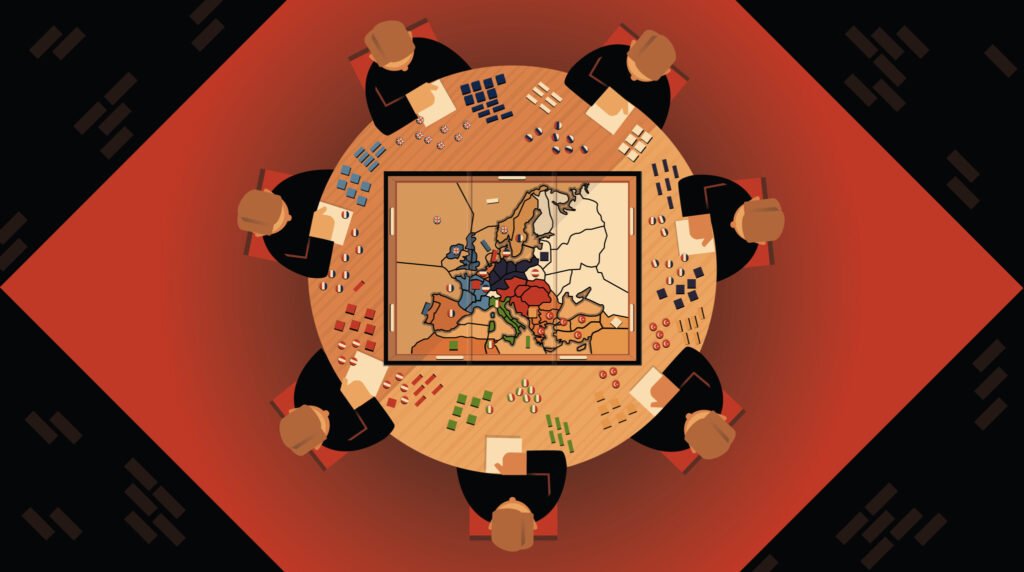
It is generally agreed that modern diplomacy began with the Treaty of Westphalia of 1648 which ended the Thirty Years War one of the most destructive conflicts of then-European powers. The peace conference to end the war opened in Münster and Osnabrück in December 1644. It involved no fewer than 194 states, from the biggest to the smallest, represented by 179 plenipotentiaries. Though negotiations started in 1664 it took almost it took four years to complete the signing ceremony. 

The treaty gave the Swiss independence of Austria and the Netherlands independence of Spain. The German principalities secured their autonomy. Sweden gained territory and a payment in cash, Brandenburg and Bavaria made gains too, and France acquired most of Alsace-Lorraine. The prospect of a Roman Catholic reconquest of Europe vanished forever. Protestantism was in the world to stay (Richard Cavendish Published in History Today Volume 48 Issue 10 October 1998). Analysts point out that the world today has become far more complex than it was about five hundred years back. Diplomacy does not involve only negotiations, but also image building/management, formal meetings and information-gathering. Today, it takes knowledge and experience as before. The present era is quite demanding with a complex international political system. Many factors are influencing modern diplomacy today, including the revolution in telecommunications. The history of diplomacy teaches that personal factors also play a vital role while conducting negotiations.

Image source: Grantland.com

A renowned British diplomat and author, Ernest Sato, defined diplomacy as an application of tact and intellect to conduct significant foreign policy matters. A modern diplomat should be careful, well-informed, knowledgeable, calm, discreet and practical with an enormous sense of responsibility. To use diplomacy as an efficient tool of global good governance, stereotypes of military confrontation and ideology must be separated. Today, the task of diplomacy should not be to search for a balance of power but a balance of mutual interest. According to the cold war diplomacy stereotypes, diplomats of different states were considered opponents; each trying to get his interest at the expense of others. Certainly, the primary goal of the diplomatic mission is to achieve and protect the national interest of one’s state. Nonetheless, all strive for a common cause today, which is to attain good governance at the national as well as international level. A common aim for developing and developed countries is to secure a world free of poverty and violence, which is safe, where justice prevails. It is necessary to acquire such diplomatic policies where mutual interest is accomplished without sacrificing either’s national interest. Today’s world that is interdependent and interlinked where diplomacy need to navigate a shared set of challenges, comprising of climate change, nuclear proliferation, globalization, transnational terrorism and much more. Effective and skillful implementation of diplomacy remains the key to tackle these mutual challenges. The world should be made peaceful and conducive for the growth of the individual as well as the state.

The world should be made peaceful and conducive for the growth of the individual as well as the state. Thus, in the complex world today caused by Russian invasion of Ukraine and the support given by Xi Jin-Ping’s China and formation of a coterie which preaches anti-West rule-based world partly due to a perception of declining US suzerainty over the world and emergence of multi-polarity where collision of interests has taken priority making diplomacy more complex.

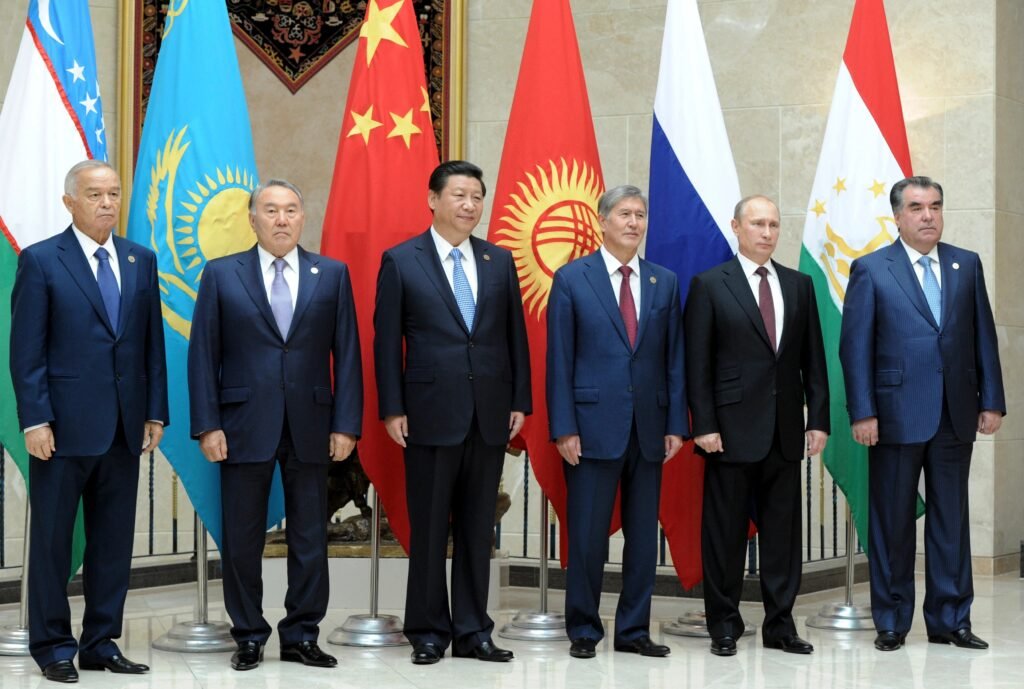
Xi Jinping and Vladimir Putin with head of states from the Central Asian countries/ Image source: Brookings

In this complex situation, Bangladesh needs a galaxy of able diplomats that can present to the world the necessity of not only a road map but also the utter need to bring up millions of people pushed into poverty and to bring the country at par with a fast-developing technological base. The World Bank is hopeful. In an assessment of Bangladesh, the World Bank reports “with technological advancement, specifically with the massive digitization in many developing countries, the pattern of migration in the international job market has been evolving with a newer dimension. More online jobs are now globally offered than ever before and the colossal pool of the technologically skilled young population of developing countries is getting access to those jobs. Digitalization not only drives technological innovation and process re-engineering to support the country’s industrial and service sector to fuel economic growth but it also acts as a driver for large-scale employment generation using digital platforms.   Having benefited from the advantages of lower cost, fewer risks, and less time, many large organizations from developed economies such as the US, the UK, Japan, and Australia have been providing IT outsourcing jobs to developing and emerging digital economies like Bangladesh.

The World Bank adds “The progression towards digitization is fostered by the accelerated use of the internet in Bangladesh as the country was ranked ninth in the world in terms of internet users in 2020. Yet, there is still enormous untapped potential since internet penetration is far from the optimum level. 

Friday, November 18, 2022

 United Kingdom's Rishi Sunak. Photo Credit: Tasnim News Agency

Foreign Policy Of New British PM Rishi Sunak – OpEd

By 

Can one compare the unflinching critical utterances of former British Prime Minister Liz Truss relating to Russian invasion of Ukraine and China’s alignment with the illiberal tide of the two countries with the Munich Agreement when then European powers (Germany, France. Britain and Italy permitting German annexation of Czechoslovakia’s Sudetenland but promising that all future differences be resolved through consultations?

The agreement wanted to appease Adolf Hitler not to break peace in Europe. In the years following World War I Adolf Hitler was gaining a reputation as one who would not follow prior agreements. His deep desire to unite the true German people pushed him to expand Germany and overtake the surrounding areas. The other nations within Europe were desperately working towards peace without recourse to violence. This commitment to non-violence weakened the ability of anyone to stop Hitler.

Written treaties and agreements became the only options for slowing Hitler’s momentum or enacting any form of punishment. The Rhineland was one of the first non-violent buffers put in place to undermine any possible German aggression. The system of treaties and alliances ironically backfired as Hitler invaded the Rhineland in response to feeling threatened by the Franco-Soviet Treaty of Alliance and Mutual Aid. This first invasion began the pattern of violent reactions from Germany to agreements for peace throughout Europe. The militarization of the Rhineland quickly led to Hitler gaining complete control of the area. Hitler then took a step further by invading Austria. This invasion was widely overlooked as many other powers in Europe were committed to appeasement, focusing on foreign policy and negotiations to prevent another country from going to war. Due to this appeasement and the absence of any physical force against him, Hitler was able to annex Austria quickly. This evolved into a desire to unite the borders of Czechoslovakia to Germany as well. 

MUNICH AGREEMENT AND ITS RESULTS

The Munich Agreement resulted from this intersection between appeasement and Czechoslovakia. The Munich Agreement signed over the Sudetenland, or the borders of Czechoslovakia where many ethnic Germans lived, to Germany in return for a promise of peace from Hitler. Munich Agreement was written to appease Hitler once more in hopes of ending his violence. This was hoped to be the final straw as Hitler himself had agreed to back down and be satisfied after this.

If we put ourselves in 1938, this agreement could be considered a great step towards peace. Appeasement could have worked, the Munich Agreement could have stopped him, and World War II would have been non-existent. No one knew exactly what Hitler was capable of, what he was hoping to accomplish, and the devastating war that was to come. The Munich Agreement was meant to bring “peace for our time,” as heralded by one of its signers, Neville Chamberlain. It was set to finally wrap up all tensions and “assure the peace of Europe.” This agreement was supposed to end the aggression and was meant to be a peaceful agreement. Instead it enabled Hitler to continue showing force. The Munich Agreement had the opportunity to stop the war and failed due to its weak predecessors and the strong pattern of appeasement towards Hitler.

CONTRAST WITH THE POLICIES OF LIZ TRUSS

Contrarily, Prime Minister Liz Truss for a while had taken strong position against the Russo-China position. Ben Judah editor-in-chief of WPR magazine observed “From the war in Ukraine to China, Truss adopted hawkish stances while serving as foreign secretary. Judah describes her as a hard-liner who is always seeking a “Thatcher-Reagan solution.” Truss “has a taste for even greater action on the world stage after being foreign secretary during a European war”.

Gallup found that almost two-thirds of the British public lacked confidence in the government, while Truss herself was even less popular. Washington Post (September 6 2022) described Liz Truss as an unpopular leader of the UK. Then Chancellor of the Exchequer Rishi Sunak, was more popular among sitting Conservative lawmakers in Parliament. Broader public opinion polls show the opposition Labor Party with its strongest lead in a decade.

The country that Truss hoped to lead was unquestionably diminished. Most analyses find that Britain’s departure from the European Union has dented its economy, added to its supply chain headaches and hurt its trading prospects. An analyst recently warned investors that Britain is “more and more looking like an emerging market country” and won’t have the ability to manage “an easy escape” from a deep recession. Britain represents a country in dismal spirits: 69% of Britons, including 60% of Conservative voters, agree that the country is “in decline”.

And the Conservative Party had grown insurrectionary. The leadership campaign for the Tory Party leadership between Rishi Sunak and Liz Truss had meant a policy vacuum on the cost-of-living crisis and in particular on the enormous rises in energy bills that will hit households and businesses imminently. Liz Truss had voted for Britain to remain in the European Union before becoming a hardcore Brexiteer. As foreign secretary, she was a reliable NATO ally and Ukraine supporter, talking tough on Russia and its President Vladimir Putin. Kremlin spokesman Dmitry Peskov said Russia expected no improvement in relations with Britain regardless of who won the Tory Party leadership was elected, because both (Rishi Sunak-Liz Truss) competing for Party leadership had “obviously been competing in anti-Russian rhetoric.” He said it was “hard to imagine a worse situation” in relations, “but, unfortunately, we cannot rule this out.” 

DOES RISHI SUNAK HAVE FRIENDS IN BRUSSELS

While unpopular in Moscow, it is not known how popular Rishi Sunak is in Brussels. The history of Britain and the European Union has been rocky. In 1963 President Charles de Gaulle vetoed Britain’s application to join the European Union. Edith Cresson former Prime Minister of France was aware of Charles De Gaulle’s dislike for Britain. He told BBC in an interview in 2017 that “Formally Britain would be in but actually they’d always be with the Americans.” The UK finally made it into the club in 1973, but just two years later was on the verge of backing out again. In 1975, the nation held a referendum on the question of joining the European Union. Tensions between the EEC and the UK exploded in 1984, when the Conservative Prime Minister Margaret Thatcher took a tough stand in order to reduce British payments to the EEC budget.

The Maastricht Treaty, which took effect in 1993, created the Brussels-based European Union (EU), of which the EEC, renamed simply the European Community (EC) was the main component. The EU was designed to integrate Europe’s nations politically and economically, including a united foreign policy, common citizenship rights and (for most member nations, not including the UK) a single currency, the euro. (The History Behind Brexit. The often-rocky relationship between Britain and the European Union stretches back nearly half a century. Sarah Pruitt 2019).

Tensions between the EEC and the UK exploded in 1984, when the Conservative Prime Minister Margaret Thatcher talked tough in order to reduce British payments to the EEC budget. Labor Prime Minister Tony Blair, who won a landslide victory in 1997, was strongly pro-European Union, and worked to rebuild ties with the rest of Europe while in office. Labor Prime Minister Gordon Brown signed the document, but was criticized for failing to defend a treaty he had helped to negotiate.

In the interests of protecting Britain’s financial sector, David Cameron became the first UK prime minister to veto a EU treaty in 2011. In early 2013, he gave a much-anticipated speech in which he outlined the challenges facing Europe and promised to renegotiate membership in the EU if his Conservative Party won a majority in the next general election. At the same time, support was growing among British voters for the UK Independence Party (UKIP) and its hard-liner stance against the EU. Against the backdrop of economic unrest in the eurozone (as the territory of the 19 EU countries that use the euro is known) and an ongoing migrant crisis, UKIP and other supporters of a possible British exit from the EU—or Brexit—increased. After winning reelection in May 2015, British Prime Minister David Cameron went to work renegotiating the UK-EU relationship, including changes in migrant welfare payments, financial safeguards and easier ways for Britain to block EU regulations. 

BREXIT REFERENDUM

In February 2016, he announced the results of those negotiations, and set June 23 as the date of the promised referendum. Turnout for the referendum was 71.8 percent, with more than 30 million people voting. The referendum passed by a slim 51.9 percent to 48.1 percent margin, but there were stark differences across the UK. Northern Ireland voted to remain in the EU, as did Scotland (where only 38 percent of voters chose “leave”), leading to renewed calls for another referendum on Scottish independence. England and Wales, however, voted in favor of Brexit.

In October 2016, Prime Minister Theresa May, who had assumed office following David Cameron’s resignation, announced her intention to invoke Article 50 of the Treaty on European Union, formally giving notice of Britain’s intent to leave the EU. On March 29, 2017, the order, signed by May a day earlier, was delivered to the Council of the European Union, officially starting the two-year countdown to Britain’s EU departure, set for March 30, 2019. However, on March 30, 2019, Parliament rejected May’s EU withdrawal agreement. The European Council set a new deadline of October 31, 2019, or the first day of the month after that in which a withdrawal agreement is passed—whichever comes sooner.

One has to take into account the tension between Britain and the European Community to understand British attitude towards the European Union. In his congratulatory message to then PM Liz Truss (on 6th September 2022) President Joe Biden vowed to work closely on global challenges and the U.S.-UK “special relationship,” despite differences over Northern Ireland. Biden reiterated “to deepening the special relationship between our countries and working in close cooperation on global challenges, including continued support for Ukraine as it defends itself against Russian aggression”.

Chinese Foreign Ministry spokesperson said that China hoped relations with Britain would remain “on the right track”. It is presumed that British conviction is deep rooted in favor of democracy and against illiberal regimes that promise quick delivery of essentials to the needy while not tolerating any dissent from the prescribed policies. 

UKRAINE AND DETERIORATION OF GLOBAL ORDER 

Harvard luminaries Dany Rodrik and Stephen Walt apprehend that, “The global order is deteriorating before our eyes. The relative decline of U.S. power and the concomitant rise of China have eroded the partially liberal, rules-based system once dominated by the United States and its allies”. They added that Russia’s invasion of Ukraine may have revitalized NATO, but it has also deepened the divide between East and West and North and South. The international order that will emerge from these developments is impossible to predict”.

Rishi Sunak has to be on guard of Boris Johnson’s Churchillian ambition of making a comeback as Prime Minister once again. There is however a difference between the two. Winston Churchill won the Second World War. Ben Baxel-Dale Smith writes in Foreign Policy magazine of large degree of continuity will persist between Johnson-Truss-Rishi Sunak administrations on foreign policy particularly on Russian invasion of Ukraine reaffirming the Western support to President Zelensky.

Given the difficulties faced by Rishi Sunak at home it is difficult to predict how far the commitment to Ukraine will go. President Biden has already ruled out American boots on the ground both in Ukraine and Taiwan. Sunak had publicly said that China is the biggest long-term threat to Britain and the world’s economic and national security. Despite Rishi Sunak’s explicit opposition to Chinese way of doing business he has not committed to assurances of Boris Johnson and Liz Truss that by 2030 the UK defense budget would rise to 3 percent.

In the same vein Harsh V Pant, an Indian analyst wrote in his article titled THE CHALLENGE OF BEING RISHI SUNAK that Sunak’s ascendency to the top is a great moment for British democracy. Sunak’s appointment as Prime Minister and his over whelming support from the members of Parliament displays that Britain has crossed the Rubicon of color prejudice that had tainted British rule in the world for centuries. It is too early to tell whether the British people will vote in a Labor Party government in the next general elections.

Now Rishi Sunak is in charge. An important analyst Peter Mclaughlin has expressed apprehension about the very unity of the United Kingdom. He thinks the ending of the Good Friday Agreement between feuding parties, the Catholics and Protestants, in Northern Ireland that had ended the bloody war in 1998 may raise the issue of uniting with the Republic of Ireland.

Equally the question of a second referendum on the independence of Scotland raised by Scottish Nationalist Party ( SNP) does not bear well for either King Charles III or the new British Prime Minister. In short the war between freedom loving countries of the world and those preaching illiberal way of life that may quickly deliver goods to the needy but under complete sway of dictators like Presidents Vladimir Putin or Xi-Jinping where George Orwell’s 1984 or Aldous Huxley’s Brave New World would be taught to the students in text books.

Kazi Anwarul Masud is a former Ambassador and Secretary of Bangladesh.

Friday, September 23, 2022

 Print

Bangladesh Foreign Policy in the Context of South Asia

By Kazi Anwarul Masud
Issue:  Net Edition    | Date : 16 Sep , 2022

Ever since the people of the world learnt the need for homogeneity –be it cultural, linguistic, religion, tribal of for the necessity to band together and felt the need to acknowledge the existence of a world beyond their own, diplomacy has been playing a role either as a friend or foe. I would argue that regardless of the size or the economic strength of a country practice of democracy remains the pillar of cohesion.

Throughout history the definition has changed in line with the existing situation. Plato argued that democracy was inferior to various forms of monarchy, aristocracy and even oligarchy on the grounds that democracy tends to undermine the expertise necessary to properly governed societies. In a democracy, he argues, those who are expert at winning elections and nothing else will eventually dominate democratic politics. Democracy tends to emphasize this expertise at the expense of the expertise that is necessary to properly governed societies. The reason for this is that most people do not have the kinds of talents that enable(STANFORD ENCYCLOPADIA OF PHILOSOPHY).

Modern practice of diplomacy puts emphasis on democracy as the binding force of diplomacy. John Stuart Mill argued that a democratic method of making legislation is better than non-democratic methods in three ways: strategically, epistemically and via the improvement of the characters of democratic citizens. Strategically, democracy has an advantage because it forces decision-makers to take into account the interests, rights and opinions of most people in society. Since democracy gives some political power to each, more people are taken into account than under aristocracy or monarchy.

The most forceful contemporary statement of this instrumental argument is provided by Amartya Sen, who argued, for example, that “no substantial famine has ever occurred in any independent country with a democratic form of government and a relatively free press”. The basis of this argument is that politicians in a multiparty democracy with free elections and a free press have incentives to respond to the expressions of needs of the poor.

A contrary argument is given by China’s Xi Jinping who argues that totalitarian system is better able to deliver goods to the people than a democratic system is. The foreign debt of China, by June 2015, stood at around US$ 1.68 trillion. China’s debt has grown dramatically over the past decade and is one of the biggest economic challenges confronting the ruling Chinese Communist Party, which turns 100 this week. Beijing identified the ballooning debt pile as a potential threat to economic stability, and in recent years tried to reduce the country’s reliance on debt for growth. But that deleveraging effort came to a pause for much of last year due to Covid-199 JUNE 2021).

This foray into Chinese economy is for two reasons: first, is because of Bangladesh’s position in South Asia. It has only 145 kilometres boundary with Myanmar (bedevilled with the Rohingya crisis) and the Bay of Bengal. On all sides Bangladesh is dependent on India. Bangladesh is India’s biggest trade partner in South Asia. Bilateral trade between India and Bangladesh has grown steadily over the last decade. India’s exports to Bangladesh in FY 2018-19 stood at $9.21 billion and imports during the same period was at $1.04 billion. The Indian economy expanded 4.1% year-on-year in the first three months of 2022, slightly higher than market forecasts of 4%, but due to rising Omicron infections, elevated energy prices, and ongoing supply chain constraints.

On the consumption side, household spending slowed sharply and both exports and imports growth also eased. In contrast, government spending increased more and gross fixed capital formation accelerated. Considering the fiscal year ended in March 2022, the economy advanced 8.7%. Reserve Bank of India estimates the GDP growth rate for FY 2023 at 7.2%.Exports to Bangladesh in China decreased.

Bangladesh is world’s second-biggest apparel exporter after China. Garments including knit wear and hosiery account for 80% of exports revenue; others include: jute goods, home textile, footwear and frozen shrimps and fish. The bilateral trade between Bangladesh and China has increased significantly in recent years. Bangladesh has been suffering from historic trade imbalances with China since its economic relationship after 1974. This trade deficit makes Bangladesh dependent on China and raises serious concerns about the economic and financial impact. For increasing exports to China could lead to a decrease in trade deficits. Bangladesh needs ensured access to the Chinese market. This step of sincere and active cooperation between the two countries is considered significant enough to reduce the trade deficit.

An Indian foreign policy expert Brahamy Chellany (China’s Debt-Trap Diplomacy Jan 23, 2017 BRAHMA CHELLANEY)and no less Donald Trump’s vice president Mike Pence warned the emerging economies of Chinese debt trap policy. Through its $1 trillion “one belt, one road” initiative, China is supporting infrastructure projects in strategically located developing countries, often by extending huge loans to their governments.

As a result, some of these countries are becoming saddled with debt, leaving them even more firmly under China’s thumb. Some contrary opinions have been sounded in favor of Chinese loans due to unemployment in those countries and the rising cost of essentials. The people in those countries are pressing their governments to accept Chinese loans that would provide employment and fund infrastructure for which the host country lacks money.

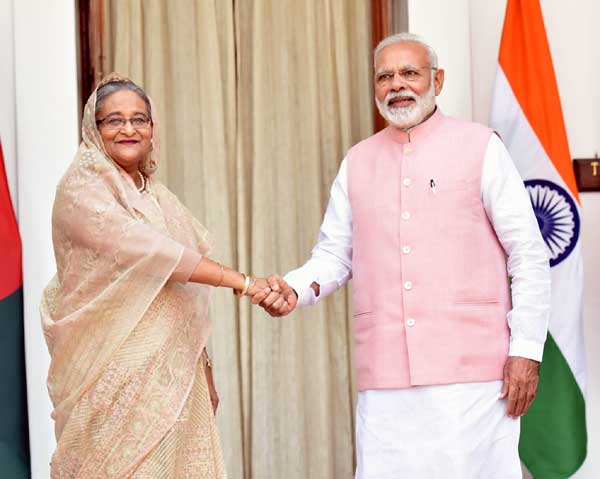
Bangladesh is no exception. Sheikh Hasina’s official visit to China (July 2019) seemingly succeeded in bolstering ties between the countries. During the trip, both sides inked a host of agreements, including two deals to provide loans to the Bangladeshi power sector. The countries also expressed interest in accelerating the work related to the Bangladesh-China-India-Myanmar Economic Corridor (BCIM EC) project, an initiative aimed at expanding the economic ties of the four countries that together are home to nearly three billion people.

Bangladesh and China turned their relationship into a strategic partnership in 2016, and, in recent years, Chinese investment in the South Asian country has risen rapidly. As part of Chinese President Xi Jinping’s Belt and Road Initiative (BRI), Beijing and Dhaka signed deals worth $21.5 billion covering a raft of power and infrastructure projects. To date, pledged BRI-related investment in Bangladesh stands at around $38 billion.

China has pumped more money into Bangladesh than any other country over the past couple of years. China alone accounts for almost a third of this investment, worth over $1 billion. The Padma Bridge, a major road-rail project across the Padma river, is being built by the China Major Bridge Engineering Company. And China’s Exim Bank is providing $3 billion for the construction of the rail link accompanying the bridge. It prompts countries like Japan and India to also come forward and invest.

Bangladesh has announced an ambitious plan to set up 100 special economic zones by 2030. Many Chinese companies appear interested in investing in these zones. The question, apart from Indian discomfiture, Bangladesh has to take into consideration whether democracy as a way of life should be abandoned because of Xi Jinping’s promise of quick delivery as he and CCP are able to deliver the goods needed by the people. Stanford Encyclopaedia of Philosophy states that unless equality is shared among citizens in law and policy there may be substantial and conscientious disagreement among them.

The basic facts are that individuals are very diverse in terms of their interests. People’s interests are diverse because of their different natural talents, because they are raised in different sectors of society and because they are raised in societies where there is a diversity of cultural backgrounds. Partly as a consequence of the fact that people are raised in different sectors of society and in distinct cultural milieus, they are likely to have deep cognitive biases when they attempt to understand other people’s interests and how they are compared to their own interests.

The question that has to be answered is whether the West now allied with the European Union and other freedom loving countries are to be jettisoned in favor of authoritarian system which promises quick results but no dissention in policy making. Apart from ideological differences Bangladesh risks to be isolated from the West whose assistance we shall need at every step of the way. In can be argued that close relations with China does not have to be at the cost of relations with the West.

Friday, August 26, 2022


Conflict in Ukraine

By Kazi Anwarul Masud
Issue:  Net Edition    | Date : 23 Aug , 2022

In an article in Foreign Affairs magazine (The Putin Doctrine: A Move on Ukraine Has Always Been Part of the Plan, By Angela Stent January 27, 2022).She wrote, and I quote- “The current crisis between Russia and Ukraine is a reckoning that has been 30 years in the making. It is about much more than Ukraine and its possible NATO membership. It is about the future of the European order crafted after the Soviet Union’s collapse.” Unquote. Russian President Vladimir Putin now reviled throughout the world, if 3rd March UNGA voting is any indication where141 voted for that resolution (more than two-thirds of those voting) received was a diplomatic blow to Moscow. On the other, five countries voted against the resolution, while 35 abstained and 12 absented themselves.

President Putin never reconciled with the demise of the Soviet Union and its denial of the seat along with the US and her allies to dictate the affairs of the world. Though Donald Trump’s “America First” and the policy’s consequential effects on Europe / NATO members and the freedom loving people throughout the world, were disappointed with the then US President.  His successor President Joe Biden has succeeded to an extent to repair the damage done but is yet to regain the trust of the world in the reliability of the US as a friend in need.

To many President Putin is on his way to establish Orwellian ‘Ministry of Truth’(based on George Orwell’s novel NINETEEN EIGHTY-FOUR).Orwell created ‘Newspeak’, the official language of the totalitarian state of ‘Oceania’. Its purpose was to diminish the range of thought by eliminating shades of meaning and nuance from Old speak (Standard English). For example, without a word for freedom, the concept of freedom cannot exist. It remains to be seen if President Putin, barring atrocities committed by Russian soldiers in occupied areas of Ukraine, is aiming to just that.

One may recall that after the fall of Adolf Hitler an estimated four million German women were raped by the victorious soldiers. During the Sino-Japanese War historians named the defeat of the Chinese and called the massacre of the Chinese capital as “Rape of Nanking,”. The Japanese soldiers butchered an estimated 150,000 male “war prisoners”, massacred an additional 50,000 male civilians, and raped at least 20,000 women and girls of all ages, many of whom were mutilated or killed in the process. These examples are not given as an “explanation” of war time massacres as one rape is far too many and the perpetrators should be punished without mercy.

It is viewed that the current crisis is ultimately about Russia redrawing the post–Cold War map and seeking to reassert its influence over half of Europe, based on the claim that it is guaranteeing its own security. One may wonder if a case can be made for President Putin. In a televised address in February this year Putin complained that over the past 30 years Russia had been patiently trying to come to an agreement with the leading NATO countries regarding the principles of equal and indivisible security in Europe.

In response to Russia’s proposals, it “faced either cynical deception and lies or attempts at pressure and blackmail, while the North Atlantic alliance continued to expand despite Russia’s protests and concerns”.  There is no denying the fact that the Western developed economies after winning the Second World War ushered in a period of complete suzerainty over the whole world including the aspiring newly emerging countries. The distribution of IBRD (International Bank for Reconstruction and Development) the head of which shall be an American national while the head of IMF (International Monetary Fund) shall be from Europe is a case in point. Europe was barred from the New World due to the strict imposition of Monroe Doctrine by the US which declared itself as the sole arbiter of settling all disputes in Latin America. The Monroe Doctrine was applied by President Kennedy during the Cuban Missile Crisis. Yet nobody,(President Biden included) wants a Third World War. The Economist in a write up on August 2nd2022 held out the hope that “The strongest reason for America’s caution, though, is the fear of escalation—that Russia might lash out militarily at NATO (“horizontal escalation”, in their jargon) or resort to use of chemical or nuclear weapons in Ukraine (“vertical escalation”). Either version would almost certainly draw NATO into direct conflict with Russia, and President Joe Biden has vowed to avoid “World War III”. But then one has to be cautious of Thucydides Trap.

More often than not wars break out due miscalculation of one party or the other. Hopefully everyone is on board with Joe Biden. Otherwise as someone has commented that the malign spirit of the Monroe Doctrine not only continues but has now been extended by the US government into a kind of Global Monroe Doctrine. In order to assert this preposterous claim on the entire planet, the United States has pursued a policy to ‘weaken’ what it sees as ‘near peer rivals’, namely China and Russia. Time has changed from the Spartan age to the modern era and certainly from the post-World War II when the Americans in particular with the British acquiescence wrote the history of the world regardless of the aspirations emerging economies and newly independent countries had. Some developing countries, eg India, could not be written off due to its size and democratic credentials which the developed economies preached.

Coming back to Russian invasion of Ukraine analysts opine that as far as Putin is concerned, the use of force is perfectly appropriate if Russia believes that its security is threatened: Russia’s interests are as legitimate as those of the West.  For the most part, the United States and Europe have rejected the Kremlin’s narrative of grievance, which centers most notably on the breakup of the Soviet Union and especially the separation of Ukraine from Russia. When Putin described the Soviet collapse as a “great geopolitical catastrophe of the twentieth century,” he was lamenting the fact that 25 million Russians found themselves outside of Russia, and he particularly criticized the fact that 12 million Russians found themselves in the new Ukrainian state.

Putin proposed to the West that countries like Lithuania, Latvia, Ukraine should not join either NATO nor be aligned with the Russian side so that Russian security structure is not threatened. The West, in particular the US, totally disregarded this Russian plan. On 15th August 2022 Norway, Denmark, Finland, Sweden, and Iceland announced to deepen their security and defense cooperation in the wake of Russia’s war on Ukraine. The prime ministers of the five countries met in Oslo, Norway and issued a joint statement. During the meeting, Norwegian Prime Minister talked about the Russian invasion of Ukraine and its consequences while also adding that the Nordic countries are committed to supporting the fight that Ukraine has been facing.

The joint statement said that Finland and Sweden’s proposed NATO membership would strengthen the alliance and that the cooperation in the field of security and defense between the countries in the region would help the strengthening and development of NATO. In addition, Nordic countries will be part of the new security order and that all five prime ministers agreed to mandate ministers of foreign affairs, ministers of defense and chiefs of defense to maximize the cooperation among the countries. Earlier in August President Joe Biden signed the instrument of ratification passed by the US Senate on the entrance of Nordic countries Finland and Sweden into North Atlantic Treaty Organization (NATO) confirming the accession.

The expansion of NATO, the world’s most powerful military alliance, comes in the backdrop of the Russia-Ukraine conflict. Among the countries who abstained on the UNGA resolution Indian ambassador to the UN T. S. Tirumurti spoke of Prime Minister Narendra Modi’s efforts to promote diplomacy to end the Ukraine crisis. He elucidated India’s firm conviction, that differences can only be resolved through dialogue and diplomacy. Indian ambassador mentioned that Prime Minister Modi unequivocally conveyed this in his discussions with world leaders including of the Russian Federation and Ukraine. Indian Prime Minister underscored the urgent imperative for humanitarian access and movement of stranded civilians. “We therefore sincerely hope that the second round of talks between the Russian Federation and Ukraine will lead to a positive outcome,” he added.

India urges that all member states demonstrate their commitment to the principles of the UN Charter to international law in respect of sovereignty and territorial integrity of all states. At the same time Bangladesh Foreign Minister Dr. A. K. Abdul Momen MP explained Bangladesh’s abstention from voting at the UNGA resolution that reprimanded Russia for invading Ukraine as the resolution was not meant to stop the war but to blame somebody. At the same time, DR. A. K. Momen emphasized the “importance of international law and respect for territorial integrity and sovereignty,” revealing that Dhaka was implicitly condemning Russia for invading Ukraine to support its adherence to international law and the U.N. Charter.

The situation in Ukraine does not appear to be easing. The US and EU Nations have Called For UNSC Meeting to discuss “Situation Prevailing In Ukraine” .The US and certain EU nations have urged the UNSC to hold a meeting on August 24 to discuss the situation in Ukraine.  Earlier on August 17, UN spokesperson Stephane Dujarric stated that the situation surrounding the Zaporizhzhia Nuclear Power Plant (ZNPP) and the shelling of a correctional institution in Yelenovka will also be discussed by the parties during the meeting. UN chief Guterres is currently on a visit to Ukraine where he is expected to meet embattled President Volodymyr Zelenskyy and Turkish President Recep Tayyip Erdogan. According to reports, the meeting between three leaders is slated to take place in Lviv, near Ukraine’s border with Poland. UN Secretary General Guterres’ visit to Ukraine comes nearly a month after the United States and Turkey helped broker a grain export deal between Ukraine and Russia which paved the way for Kyiv to export its millions of tons of grain that were stuck in the Black Sea ports since the onset of war.

“Guterres’ trip to Ukraine will allow him “to see first-hand the results of the initiative … that is so critically important to hundreds of millions of people,” It is further expected that forthcoming meeting in Ukraine would also raise the need for a “political solution” to the war. It is pertinent to mention here that the delegations of Russia and Ukraine have held several rounds of peace negotiations since the onset of the war on February 24, but they all have failed to achieve the desired results. It is expected that talks might resume with Russia in August. Meanwhile, the Ukrainian government has made it clear that the country will not accept any “ceasefire settlement” that involves ceding territory to Moscow.

Despite Ukrainian President’s bravado displayed on television screens one has to recognize Russian security threats that the Western countries pose by high level visits to Kyiv and arms given to the regime. Quote “Ukraine is part of the Russian area of influence, which includes a variety of hybrid and illiberal regimes, but also loyal allies (Belarus and Kazakhstan), hectic ‘rebels’ (Georgia), and ambiguous entities (Kyrgyzstan and Tajikistan) that are neither aligned with the Kremlin nor directly opposed to it. Russia has long been accustomed to dominating political elites within this area of influence, including by authorizing external military interventions and promoting regime change.

Among the states counted as ‘rebels’, Ukraine has been the most independent and western-oriented, underlined by the Orange Revolution in 2004-5 and the events of the Euromaidan that ultimately brought an end to the regime of Viktor Yanukovych. Given the fact that the Western countries are unlikely to send troops to Ukraine it would be logical to recognize Russian security interests and for Russia to let Ukraine remain an independent country without ties to NATO or the European Union. At all costs rise of an Adolf Hitler in Europe has to be avoided.”