Friday, March 8, 2024

Print

How much Longer will Pakistan Army Play the Role of Judge and Jury?

By Kazi Anwarul Masud
Issue:  Net Edition    | Date : 26 Feb , 2024

HOW LONG PAKISTAN ARMY ESTABLISHMENT MAINTAIN ITS ‘FARCICAL ELECTION”

Can the Pakistan Army Establishment play the role of empire with Imran Khan and his PTI party in opposition? The latest election results (February 15,2024) reveal that Pakistan Tehreek-e-Insaf (PTI)-affiliated independents won 93 seats, the Pakistan Muslim League – Nawaz (PMLN) won 73 seats, and the Pakistan Peoples Party (PPP) won 54 seats, according to official results. Imran Khan’s PTI-backed candidates would join the Majlis Wahdat-e-Muslimeen party, which won one parliamentary seat, and he ruled out any possibility of joining the PMLN-PPP coalition. Members of the Sharif brother’s led alliance are “mandate thieves,” Imran Khan said, adding that such a coalition lacks “credibility.”

The last time the PMLN and PPP aligned was in April 2022, when they ousted Imran Khan from power via a no-confidence vote. At that time, the PMLN placed Nawaz Sharif’s brother Shehbaz Sharif in power, where he ruled for 14 months until being replaced by a caretaker government. Coalition officials once again nominated Shehbaz on Tuesday to be their candidate for prime minister. Shehbaz’s first tenure was widely unpopular, with many Pakistanis accusing him of being easily manipulated by Nawaz and the country’s military. Pakistan’s armed forces backed the PMLN in the latest vote count. Imran Khan has claimed that widespread vote-rigging prevented a greater win for PTI-backed candidates.

VOTE RIGGING AND DEEP STATE GAME

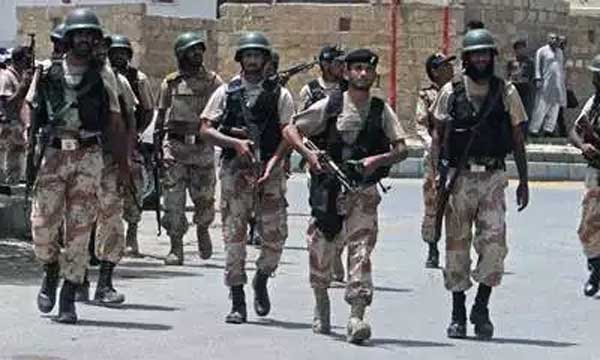
On the day of the election, Pakistani authorities temporarily shut down mobile internet access, citing security concerns, and threw out PTI-connected representatives meant to oversee vote counting. “I warn against the misadventure of forming a government with stolen votes,” Khan said. “Such daylight robbery will not only be a disrespect to the citizens but will also push the country’s economy further into a downward spiral.” That the Pakistan Army Establishment is playing the Deep State game is evident. Albeit both the US government and the Pakistan Army Establishment have denied collusion in ousting Imran Khan’s government it is difficult to accept a proposition that the Pakistan Army Establishment used to rule the country for decades would sit idle letting Imran Khan play a Pied Piper’s tune not liked by the Army Establishment. Michael Kugelman of South Asia Brief in Foreign Policy Magazine (February 14th, 2024) wrote that electorally speaking, the PTI party was left for dead ahead of the country’s vote last week. The Party of former Prime Minister Imran Khan was targeted by a monthsthat hollowed out its leadership and limited its capacity to mobilize, penalized by the court ruling that required it to field candidates as independents and was on the outs with a powerful military that has long shaped the political environment to serve its interests. Yet independents backed by PTI won nearly 100 parliamentary seats on Feburary 8—more than any other party but not enough for a majority. (It could have been even more: The party has produced evidence indicating that many official results contradict earlier figures from polling stations.) But this stunning electoral success won’t catapult PTI to power. Imran Khan’s main rivals announced that they had reached a deal to form the next coalition government. Nonetheless, PTI seems to have broken the military’s stranglehold on political control, giving cause for some optimism about the future of Pakistan’s democracy. A few factors drove PTI’s performance, but one was defiance—an unwillingness to let the powerful military dictate the outcome of an election that it wanted PTI to lose. A shift in the military’s approach likely fanned the flames.

DEEP STATE AND PAKISTAN ARMY ESTABLISHMENT

It may be relevant to introduce the concept of Deep State as it relates to the Pakistan Army Establishment. N.S. Gill a Latinist, writer, and teacher of ancient history and Latin wrote on November 16, 2019, that The phrase Pyrrhic victory originates from King Pyrrhus of Epirus, who in B.C.E 281 suffered the original Pyrrhic victory. King Pyrrhus landed on the southern Italian shore (in Tarentum of Magna Graecia) with 20 elephants and 25,000 to 30,000 soldiers ready to defend their fellow Greek speakers against advancing Roman domination. Pyrrhus won the first two battles at Heraclea in B.C.E 280 and at Asculum in B.C.E 279. However, throughout those two battles, he lost a very high number of soldiers. With numbers cut drastically, King Pyrrhus’s army became too thin to last and they eventually ended up losing the war. In both of his victories over the Romans, the Roman side suffered more casualties than Pyrrhus’ side did. But the Romans also had a much larger army to work with — thus, their casualties meant less to them than Pyrrhus did to his side. The term “Pyrrhic victory” comes from these devastating battles.

Greek historian Plutarch described King Pyrrhus’s victory over the Romans in his “Life of Pyrrhus:” “The armies separated; and, it is said, Pyrrhus replied to one that gave him joy of his victory that one other such victory would utterly undo him. For he had lost a great part of the forces he brought with him, and almost all his particular friends and principal commanders; there were no others there to make recruits, and he found the confederates in Italy backward. On the other hand, as from a fountain continually flowing out of the city, the Roman camp was quickly and plentifully filled up with fresh men, not at all abating in courage for the loss they sustained, but even from their very anger gaining new force and resolution to go on with the war.”

PRESIDENT EISENHOWER’S WARNING TO HIS SUCCESSORS OF “MILITARY-INDUSTRIAL COMPLEX”

It would be relevant to recall the warning given by President Dwight Eisenhower to his successors to “guard against the acquisition of unwarranted influence, whether sought or unsought, by the military-industrial complex.” White House Chief Strategist Steve Bannon, along with ultra-conservative news outlets like Breitbart News claimed that Former President Obama was orchestrating a deep state attack against the Trump administration. The allegation grew out of Trump’s unsubstantiated claim that Obama had ordered the wiretapping of his telephone during the 2016 election campaign.

CONCLUSION

It is doubtful if Pakistan will ever be free of the clutches of the Army Establishment. As it appears the Days of Imran Khan’s defiance of the Army rulers are over regardless of the period of detention determined by the Army. Pakistan has to cow down to the dictates of the Army as the country has done for decades. In the larger scenario, the US needs Pakistan in its quarrel with China which has to be controlled in any case though China would remain a friend of Pakistan if for no other reason than the India-China fight which flares up on occasion.


Saturday, March 2, 2024

     Is Vladimir Putin Planning to Put Nuclear Weapons in Space?

Is Vladimir Putin Planning to Put Nuclear Weapons in Space?

Elsewhere around the region, people gathered to watch, expecting to see a small burst of light, maybe something like a shooting star.

by Kazi Anwarul Masud
 
THE RISK OF PUTTING NUCLEAR WEAPONS IN SPACE

Incredible yet frightening at the same time that according to US intelligence President Vladimir Putin is planning to put nuclear weapons in space. But then it was not the first time. In 1962 the US had done it in the tiny Johnstone Atoll in the middle of the Pacific.      

Elsewhere around the region, people gathered to watch, expecting to see a small burst of light, maybe something like a shooting star. Instead, the entire sky lit up, bringing daylight to the middle of the night.  A giant ball of plasma erupted above them, particles of radiation raining down on the atmosphere. ‘It looked as though the heavens had belched forth a new sun that flared briefly, but long enough to set the sky on fire,’ said one account in the Hilo Tribune-Herald. The bomb was launched from Johnston Atoll in the South Pacific. This was Starfish Prime, a 1.4 megaton bomb, 500 times as powerful as Hiroshima. It aimed to examine how a nuclear bomb in space would affect Earth’s atmosphere.

Credit: iStock/@3DSculptor

One could compare the decision of US President Harry Truman to bomb Hiroshima and Nagasaki, albeit no evidence is still available that though the main enemy of World War II was Germany, Truman decided to bomb Japanese cities, which were not the main theater of the War. Decidedly the Japanese attack on Pearl Harbor and the destruction that followed forced President Franklin Roosevelt to declare war on Japan. One could construct a scenario that Japan was destroyed because it was an Asian country and not a part of Europe when Churchill, Stalin, and Franklin Roosevelt were engaged in the Yalta Conference busy dividing the defeated Germany and constructing the edifice of the Nuremberg Trial.

YALTA CONFERENCE AND THE DIVISION OF GERMANY

The participants had no qualms about Stalin’s demand to cede East Germany as a part of the Soviet Union.  The world has changed as has science. It is now believed that “space is already radioactive. Astronauts, animals, and plants in space are all subjected to cosmic radiation. This could come from distant stars or weird phenomena like quasars, but the biggest, most dangerous source, is the Sun. However, the protective cocoon of the atmosphere – specifically the magnetosphere – stops this radiation from reaching life on Earth. Instead, the radiation jiggles molecules in the atmosphere and creates one of nature’s most awesome spectacles, aurora – seen as the Northern Lights across Europe, Russia, and the US. But even if the radiation could not reach Earth’s surface, nuclear bombs in space could still have catastrophic consequences on the ground.

The assumed aim of a Russian nuclear weapon is to destroy satellites. How this may be achieved is not known. The bomb could target one particular satellite and consider its mission accomplished.  However, the damage from a nuclear bomb is not easy to contain. The US wanted to nuke during the height of the Cold War, but also the space race, the US and the Soviet Union were locked in a fierce battle of one-upmanship. Thankfully, both were shelved on account of the risks outweighing the benefits, especially in the case of a failed launch.    Russia is a vital part of the ISS program, and agreed to stay in the partnership until at least 2028, suggesting Russian cosmonauts will also remain on board, and should expect their country to keep the spacecraft safe. There is one more potential issue from a nuclear weapon in space, a global one.  The most powerful blasts of solar radiation can knock out communications on Earth.

Could a nuke do the same? In 1859, Earth was hit by the biggest solar storm ever recorded. Known as the Carrington Event, it was so powerful it gave telegraph operators electric shocks. Technology has moved on a fair bit since then, so it isn’t hard to imagine the damage that could be done by a similar-sized or even bigger blast of radiation.   The most powerful blasts of solar radiation can knock out communications on Earth. Could a nuke do the same?

In 1859, Earth was hit by the biggest solar storm ever recorded. Technology has moved on a fair bit since then, so it isn’t hard to imagine the damage that could be done by a similar-sized or even bigger blast of radiation. And like the radiation cloud crippling passing satellites, communications blackouts caused by nuclear fallout in the atmosphere would be impossible to contain or target. Whoever set off the bomb could end up in the dark too.

DONALD TRUMP’S THREAT OF A NUCLEAR ARMS DEBATE

Donald Trump’s threats spark a new nuclear arms debate in Germany.  Two years after its about-turn on defense policy in response to the Russian invasion of Ukraine, Germany is starting to rethink another national taboo: nuclear weapons. Previously reluctant to engage in foreign military commitments following World War Two, Germany changed course after Russia’s 2022 invasion, becoming one of the biggest contributors of weapons to Ukraine.

Now German officials are openly raising the question of nuclear weapons, prompted by recent comments about NATO from Donald Trump, a likely contender in this year’s US presidential vote. Trump’s suggestion that the United States should abandon any NATO ally that did not meet the alliance’s defense spending target has shaken officials in Berlin, which has long looked to Washington for protection. Already, the war in Ukraine has pushed others towards reconsidering the need for Germany to have a nuclear deterrent — even an indirect one.”

CONCLUSION

On 14th February 2024 Deputy Secretary General at the European Parliament spoke of NATO-EU partnership being crucial to European security. He underlined the importance of NATO-EU cooperation to address the security situation in the Black Sea, Western Balkans, and Eastern Europe, and tackle other shared challenges like disinformation, cyber security, and military issues. He said that said that the outcome of the war in Ukraine would shape the future of European security for decades to come.

Since Russia’s annexation of Crimea in 2014, NATO has implemented the largest reinforcement of its collective defense in a generation, including by strengthening its deterrence and defense, increasing defense spending, and supporting the defense industry. NATO has enhanced its partnerships, alongside the EU, with Georgia and Moldova, which face unrelenting pressure from Russia. NATO also works closely with the EU on the ground in the Western Balkans   in Kosovo and by supporting the EU-led operation in Bosnia and Herzegovina to maintain a safe and secure environment for all. In short no one will gain from playing the nuclear game. The stakes are too high and the world has become too complicated.  

Kazi Anwarul Masud is a retired Bangladeshi diplomat. During his tenure, he worked in several countries as the ambassador of Bangladesh including Thailand, Vietnam, South Korea and Germany

How much Longer will Pakistan Army Play the Role of Judge and Jury?

By Kazi Anwarul Masud
Issue:  Net Edition    | Date : 26 Feb , 2024

HOW LONG PAKISTAN ARMY ESTABLISHMENT MAINTAIN ITS ‘FARCICAL ELECTION”

Can the Pakistan Army Establishment play the role of empire with Imran Khan and his PTI party in opposition? The latest election results (February 15,2024) reveal that Pakistan Tehreek-e-Insaf (PTI)-affiliated independents won 93 seats, the Pakistan Muslim League – Nawaz (PMLN) won 73 seats, and the Pakistan Peoples Party (PPP) won 54 seats, according to official results. Imran Khan’s PTI-backed candidates would join the Majlis Wahdat-e-Muslimeen party, which won one parliamentary seat, and he ruled out any possibility of joining the PMLN-PPP coalition. Members of the Sharif brother’s led alliance are “mandate thieves,” Imran Khan said, adding that such a coalition lacks “credibility.”

The last time the PMLN and PPP aligned was in April 2022, when they ousted Imran Khan from power via a no-confidence vote. At that time, the PMLN placed Nawaz Sharif’s brother Shehbaz Sharif in power, where he ruled for 14 months until being replaced by a caretaker government. Coalition officials once again nominated Shehbaz on Tuesday to be their candidate for prime minister. Shehbaz’s first tenure was widely unpopular, with many Pakistanis accusing him of being easily manipulated by Nawaz and the country’s military. Pakistan’s armed forces backed the PMLN in the latest vote count. Imran Khan has claimed that widespread vote-rigging prevented a greater win for PTI-backed candidates.

VOTE RIGGING AND DEEP STATE GAME

On the day of the election, Pakistani authorities temporarily shut down mobile internet access, citing security concerns, and threw out PTI-connected representatives meant to oversee vote counting. “I warn against the misadventure of forming a government with stolen votes,” Khan said. “Such daylight robbery will not only be a disrespect to the citizens but will also push the country’s economy further into a downward spiral.” That the Pakistan Army Establishment is playing the Deep State game is evident. Albeit both the US government and the Pakistan Army Establishment have denied collusion in ousting Imran Khan’s government it is difficult to accept a proposition that the Pakistan Army Establishment used to rule the country for decades would sit idle letting Imran Khan play a Pied Piper’s tune not liked by the Army Establishment. Michael Kugelman of South Asia Brief in Foreign Policy Magazine (February 14th, 2024) wrote that electorally speaking, the PTI party was left for dead ahead of the country’s vote last week. The Party of former Prime Minister Imran Khan was targeted by a monthsthat hollowed out its leadership and limited its capacity to mobilize, penalized by the court ruling that required it to field candidates as independents and was on the outs with a powerful military that has long shaped the political environment to serve its interests. Yet independents backed by PTI won nearly 100 parliamentary seats on Feburary 8—more than any other party but not enough for a majority. (It could have been even more: The party has produced evidence indicating that many official results contradict earlier figures from polling stations.) But this stunning electoral success won’t catapult PTI to power. Imran Khan’s main rivals announced that they had reached a deal to form the next coalition government. Nonetheless, PTI seems to have broken the military’s stranglehold on political control, giving cause for some optimism about the future of Pakistan’s democracy. A few factors drove PTI’s performance, but one was defiance—an unwillingness to let the powerful military dictate the outcome of an election that it wanted PTI to lose. A shift in the military’s approach likely fanned the flames.

DEEP STATE AND PAKISTAN ARMY ESTABLISHMENT

It may be relevant to introduce the concept of Deep State as it relates to the Pakistan Army Establishment. N.S. Gill a Latinist, writer, and teacher of ancient history and Latin wrote on November 16, 2019, that The phrase Pyrrhic victory originates from King Pyrrhus of Epirus, who in B.C.E 281 suffered the original Pyrrhic victory. King Pyrrhus landed on the southern Italian shore (in Tarentum of Magna Graecia) with 20 elephants and 25,000 to 30,000 soldiers ready to defend their fellow Greek speakers against advancing Roman domination. Pyrrhus won the first two battles at Heraclea in B.C.E 280 and at Asculum in B.C.E 279. However, throughout those two battles, he lost a very high number of soldiers. With numbers cut drastically, King Pyrrhus’s army became too thin to last and they eventually ended up losing the war. In both of his victories over the Romans, the Roman side suffered more casualties than Pyrrhus’ side did. But the Romans also had a much larger army to work with — thus, their casualties meant less to them than Pyrrhus did to his side. The term “Pyrrhic victory” comes from these devastating battles.

Greek historian Plutarch described King Pyrrhus’s victory over the Romans in his “Life of Pyrrhus:” “The armies separated; and, it is said, Pyrrhus replied to one that gave him joy of his victory that one other such victory would utterly undo him. For he had lost a great part of the forces he brought with him, and almost all his particular friends and principal commanders; there were no others there to make recruits, and he found the confederates in Italy backward. On the other hand, as from a fountain continually flowing out of the city, the Roman camp was quickly and plentifully filled up with fresh men, not at all abating in courage for the loss they sustained, but even from their very anger gaining new force and resolution to go on with the war.”

PRESIDENT EISENHOWER’S WARNING TO HIS SUCCESSORS OF “MILITARY-INDUSTRIAL COMPLEX”

It would be relevant to recall the warning given by President Dwight Eisenhower to his successors to “guard against the acquisition of unwarranted influence, whether sought or unsought, by the military-industrial complex.” White House Chief Strategist Steve Bannon, along with ultra-conservative news outlets like Breitbart News claimed that Former President Obama was orchestrating a deep state attack against the Trump administration. The allegation grew out of Trump’s unsubstantiated claim that Obama had ordered the wiretapping of his telephone during the 2016 election campaign.

CONCLUSION

It is doubtful if Pakistan will ever be free of the clutches of the Army Establishment. As it appears the Days of Imran Khan’s defiance of the Army rulers are over regardless of the period of detention determined by the Army. Pakistan has to cow down to the dictates of the Army as the country has done for decades. In the larger scenario, the US needs Pakistan in its quarrel with China which has to be controlled in any case though China would remain a friend of Pakistan if for no other reason than the India-China fight which flares up on occasion.


Can Poverty Be Eliminated In The Foreseeable Future? – OpEd

By 

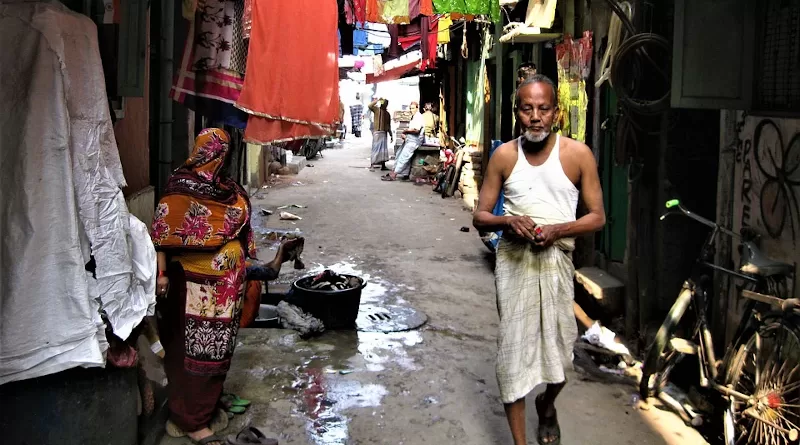
Poverty in Africa and many parts of the Indian sub-continent is endemic and its history is as old as human civilization. Many famous experts and specialized magazines have delved into the history and causes of poverty in these areas and elsewhere. Encyclopedia Britannica for example has defined poverty as the state of one who lacks a usual or socially acceptable amount of money or material possessions.

Poverty is said to exist when people lack the means to satisfy their basic needs. In this context, the identification of poor people first requires a determination of what constitutes basic needs. These may be defined as narrowly as “those necessary for survival” or as broadly as “those reflecting the prevailing standard of living in the community.” The first criterion would cover only those people near the borderline of starvation or death from exposure; the second would extend to people whose nutrition, housing, and clothing, though adequate to preserve life, do not measure up to those of the population as a whole. 

The problem of definition is further compounded by the noneconomic connotations that the word poverty has acquired. Poverty has been associated, for example, with poor health, low levels of education or skills, an inability or an unwillingness to work, high rates of disruptive or disorderly behavior, and improvidence. While these attributes have often been found to exist with poverty, their inclusion in a definition of poverty would tend to obscure the relation between them and the inability to provide for one’s basic needs. Whatever definition one uses, authorities and laypersons alike commonly assume that the effects of poverty are harmful to both individuals and society.

Although poverty is a phenomenon as old as human history, its significance has changed over time. Under traditional (i.e., nonindustrialized) modes of economic production, widespread poverty had been accepted as inevitable. The total output of goods and services, even if equally distributed, would still have been insufficient to give the entire population a comfortable standard of living by prevailing standards. Several types of poverty may be distinguished depending on such factors as time or duration (long- or short-term or cyclical) and distribution (widespread, concentrated, individual).  Collective poverty is relatively general and lasting in parts of Asia, the Middle East, most of Africa, and parts of South America and Central America. Life for the bulk of the population in these regions is at a minimal level.

Collective poverty is usually related to economic underdevelopment. The total resources of many developing nations in Africa, Asia, and South and Central America would be insufficient to support the population adequately even if they were equally divided among all of the citizens. Proposed remedies are twofold: (1) expansion of the (GNP) through improved agriculture or industrialization, or both, and (2) population limitation. Thus far, both population control and induced economic development in many countries have proved difficult, controversial, and at times inconclusive or disappointing in their results. An increase in the GNP does not necessarily lead to an improved standard of living for the population at large, for several reasons. The most important reason is that, in many developing countries, the population grows even faster than the economy does, with no net reduction in poverty as a result. 

To reduce birth rates, some developing countries have undertaken nationally administered family-planning programs, with varying results. N.R. Desaprira in an article wrote According to the World Bank’s estimates on income poverty, 42% of the world’s population lived below the poverty line of $1.90 in 1981. By 1990 however, that number had reduced to 35%. Similarly, multidimensional poverty (an index that takes into account several factors that constitute poor people’s experience of deprivation) has also been decreasing and globally only 13.5% of people are multidimensionally poor by 2017.

Despite this downward trending pattern at a global level, South Asia still accommodates a significantly large share of the poor population in terms of both income and multidimensional poverty. Regional distribution of the global poor: Where does South Asia stand? The world’s poverty rate dropped dramatically from 94 percent in 1820 to 10.7 percent in 2013. Towards the end of this period (between 1990-2013), the proportion of the poor living in South Asia grew. In 1990, when the poverty line was $1.90 a day South Asia accounted for the second largest share of the global poor  – a figure equal to almost 600 million million people, while East Asia and the Pacific accommodated the largest share almost 1000 million people. This picture however of the distribution of the world’s poor had drastically changed by 2013.

The number of poor living in Sub-Saharan Africa had significantly increased from 276.1 million in 1990 to 388.7 million, accounting for the largest share of 50.7% of the global poor by 2013. Despite East Asia and the Pacific considerably declining its share of the world’s poor (42.9% between 1990-2013), South Asia remained the region with the second largest grouping of the global poor. Specifically, South Asia’s share of the global poor has increased from 27.3% to 33.4% between 1990-2013, despite the number of poor people in South Asia falling by 248.8 million.

From various analyses, it is clear that Sub-Saharan Africa has been accounting for the largest PHI since 1992, reporting 41% in 2013. In contrast, the headcount indices of all other regions by 2013 were significantly below the world average (21.9%) between 1990-2013. In particular, South Asia performed remarkably well in poverty reduction and was able to decline its poverty rates from 44.6% to 15.1% respectively, during 1990-2013. However, the PHI of South Asia is still significantly higher than that of other regions such as East Asia and the Pacific, Eastern Europe and Central Asia, Latin America and the Caribbean. 

According to an analyst higher poverty rates and the large share of the poor in South Asia are driven mainly by region-wide political unrest. Political tension and civil wars are common in most South Asian countries, meaning such turmoil reduces the effectiveness of a country’s anti-poverty policies. In addition, ineffective, non-transparent, and non-rule-based anti-poverty fiscal transfer programs in the region do not facilitate poverty reduction while increasing the level of fiscal unrest in an economy.

The Multidimensional Poverty Index (MPI) is based on three dimensions and ten indicators developed by the Oxford Poverty and Human Development Index (OPHI). According to this data, the declining trend of global multidimensional poverty between 2011-2017 is remarkable.  South Asia accounted for the largest share of global multidimensionally poor people between 2010-2017. More specifically, South Asia accommodated almost half of the world’s multidimensionally poor in 2017. Compared to the Middle East and Africa South Asia performed remarkably well in poverty reduction by reducing income poverty by 29.5%, South Asia has accommodated the second largest share of global poor between 1990-2013.

Therefore, South Asia’s poverty reduction outcomes are negligible compared to East Asia and the Pacific, which were able to decline the share of poor accommodated by 42.9%. In terms of multidimensional poverty, South Asia has been accounting for the largest share of global multidimensionally poor people between 2010-2017. More specifically, South Asia accommodated almost half (48%) of the world’s multidimensionally poor people in 2017. The proportion of poor people in South Asia, however, has reduced by 3% while the shares for Sub-Saharan Africa and the Arab States have increased by 8% and 2% respectively. While at first glance the figures on the reduction of poverty globally look encouraging, upon closer inspection the picture is poor for South Asia. 

Conclusion

In the present enmeshed world with many countries possessing nuclear weapons, both declared and undeclared, and complicated formulas relating to deregulation  and global hot spots in the Middle East and Africa where multipolarity has become the name of the game along with the ascendency of AI in many parts of the world( particularly Global Right ) the US has lost the power it enjoyed since the Yalta Conference in a so-called “rules-based world” , practiced more in the breach than in honor,  the US has to take along its partners to implement any of its mission. NATO, the European Union, and others are unwilling to abide by the dictates of the so-called Super Power. In particular, the “limitless” friendship between China and Russia that stands in the way of Western Suzerainty and China’s Road and Bridge Initiative has attracted many developing countries to develop infrastructure in their countries they need but have no funds, despite Donald Trump’s Vice President Mike Pence’s public warning on China’s Debt Trap.  

Ambassador Kazi Anwarul Masud

Kaz