Friday, June 28, 2024

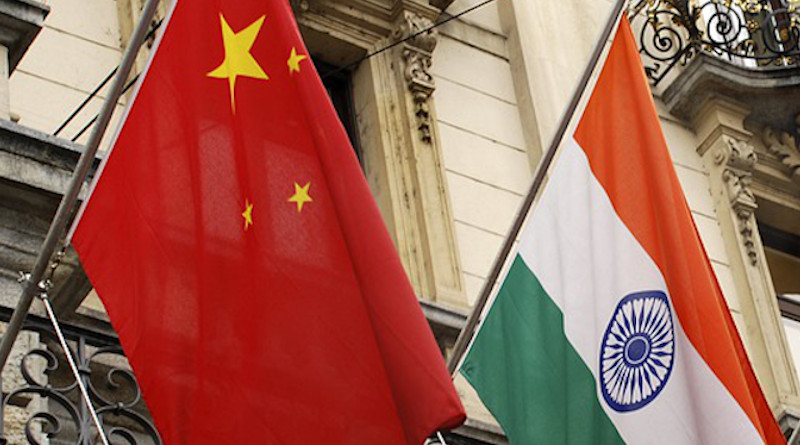
 Flags China India

Effects Of Indo-China Political Tension In Global Framework – OpEd

By 

Mayuri Banerjee a Research Analyst with the East Asia Centre at the Manohar Parrikar Institute for Defense Studies and Analyses (MP-IDSA), New Delhi. Her research focus is on India-China relations. She primarily looks at the role of memory and trust in India-China relations after the 1962 war and Indian media’s perception of China. In an article she traced the history of the Sino-Indian border dispute has a long and complex history. If one were to look for some key points one could mention: Aksai Chin: One of the disputed territories is Aksai Chin, which is administered by China but claimed by India. It lies at the intersection of Kashmir, Tibet, and Xinjiang. Aksai Chin is mostly uninhabited high-altitude wasteland, but it has significant pasture lands at the margins. McMahon Line: The other disputed territory is south of the McMahon Line, in an area formerly known as the North-East Frontier Agency (now Arunachal Pradesh). The McMahon Line was signed between British India and Tibet as part of the 1914 Simla Convention, but China disowns this agreement, stating that Tibet was not independent when it signed the Simla Convention.

1962 Sino-Indian War: The conflict escalated in 1962 when Chinese troops attacked Indian border posts in Ladakh in the west and crossed the McMahon Line in the east. The war resulted in significant casualties.  There were border clashes in 1967 in the region of Sikkim, despite an agreed border. In 1987 and 2013, potential conflicts over the Line of Actual Control (LAC) were successfully de-escalated. Recent Tensions: Multiple skirmishes broke out in 2020, leading to dozens of deaths in June. Agreements signed in 1993 and 1996 aimed to address the boundary question, including confidence-building measures and defining the LAC. Various dispute resolutions have been established over the years.  In summary, the India-China border dispute remains ongoing, with historical roots and periodic tensions. Diplomatic efforts continue to find a resolution to this complex issue. Assessing the success of Border Dispute Management Talks and Confidence-Building Measures. The success of the bilateral dialogue mechanisms and confidence-building measures described above needs to be assessed according to three aspects; management of border conflict, addressing the bilateral trust deficit, and resolution of the border dispute. A cursory review of the state of affairs indicates that, in all three aspects, both countries have achieved minimal success. For instance, in the matter of border conflict management, the maintenance of peace and tranquility along the LAC has been one of the most important stated objectives. Although China and India have been able to avert a major 1962-style confrontation, the number of military incursions by China has risen sharply, from 334 in 2014 to 606 in 2019.   

The Galwan Valley military standoff led to severe military clashes; and the stalemate continues. Simultaneously, local feuds between the armies have inclined toward more violence, that is from fist fights and throwing stones, the armies of the two sides have resorted to more violent measures including the use of clubs studded with nails or wrapped with metal barbed wire.  These instances point toward a lack of local-level communication and understanding, which persists amid the backdrop of diplomatic proclamations of friendship and cooperation. Likewise, despite high level political and diplomatic exchanges and frequent meetings of the top leadership, the trust deficit between the two countries has only widened. There exists the perception of a considerable security threat on both sides as India and China have moved rapidly to upgrade their border infrastructure and military capabilities along the disputed border on the sidelines of the Special Representative Talks and Joint Working Group meetings. In recent years, a vigorous border infrastructure race has developed between the two countries, wherein both sides have engaged in building extensive road and railway connections on their respective sides of the border, upgrading military facilities, and increasing overall troop deployments for quick mobilization. This in turn has aggravated insecurities in both countries and is considered one of the primary reasons for the frequent border skirmishes along the LAC. In particular, the Doklam (2017) and Galwan Valley (2020) clashes were triggered by road-building activities undertaken by China and India, respectively. Apart from upgrading military infrastructure along the border, both sides have also invested heavily in modernizing their conventional and non-conventional combat forces as an indication of battle preparedness to the other.   In view of increasing military capabilities, assertive behavior and intense distrust, the notion of peace along the LAC seems dependent on the political wisdom of their respective governments. Even after fifteen rounds of Joint Working Group meetings and eighteen rounds of Special Representative Dialogues, the border dispute is far from being resolved. Even though the negotiation process follows a generous principle of package settlement through a sectoral approach, the two countries have failed to go beyond routine delegation meetings and joint declarations. 

The ascent to power of Xi Jinping in China and Narendra Modi in India, known for their strong leadership and corporate style of politics, had raised hopes for a final settlement of the border dispute, but domestic political considerations and strategic threat perceptions continue to severely constrain the ability of these political leaders to undertake sweeping decisions to resolve the dispute. The border dispute undeniably remains one of the major issues impinging on Sino-Indian bilateral ties. Experts contend that there are multiple factors today which sustain the border dispute. The first is the geographical constitution of the disputed areas: The rugged, featureless terrain and extreme weather conditions make determination of the precise alignment challenging. Subsequently, implementation of border agreements on the ground also remains elusive. Second, there is asymmetry in the level of urgency for the settlement of the border dispute. In contrast to New Delhi’s endeavors seeking a quick settlement, Beijing has staunchly resisted any fast-tracking of the resolution process, arguing that the border dispute is a complicated question and should be negotiated only when conditions are favorable. 

The primary reason for this difference in approaches is that the disputed border does not pose a security threat to China, and therefore Beijing is willing to wait for a more beneficial resolution. In contrast, New Delhi sees the border dispute as source of instability and worries and that China would use the unresolved border to bully India. The third factor inhibiting the resolution of the border dispute is intense nationalism in both countries. For China, the border dispute is intrinsically linked to Tibet and the Dalai Lama, and since the CCP has always projected the Tibetan government-in-exile in a negative light, territorial concessions involving Tawang will not only endanger China’s own rule in Tibet but will also be seen domestically as sign of weakness; a terrifying prospect for the Chinese leadership. As for India, no political party would be able to propose a territorial exchange with China without seriously jeopardizing its electoral prospects, as the memories of 1962 war continue to haunt the Indian national psyche. Lastly, along with the boundary dispute, new issues have begun to stir trouble in Sino-Indian bilateral ties. India’s concerns regarding China’s diversion of the Yarlung-Tsangpo/Brahmaputra river water, the China-Pakistan Economic Corridor, and China’s growing influence in South Asia have emerged as new irritants for Indian policy makers. 

Similarly, Beijing too is annoyed by India’s increasing proximity with Southeast Asian countries and its diplomatic-military exchanges with the United States, Japan, and Australia. These issues further erode political will in both countries and in this context territorial exchange by swap or political settlement appears a daunting task. As evinced by the recent Galwan Valley clashes, managing the border dispute is both a political and an economic exigency for India and China because any major confrontation between the two countries will not only hurt the long-term prospects for development of both, but will also have significant repercussions on Asian stability and prosperity. Therefore, the policy-making elites of both countries need to frame innovative solutions like creating soft borders through civilian, cultural, and economic exchanges, and involving local communities in managing the border.  Such an approach can help reduce the number of military encounters between the two countries and create an enduring peace in the border region. 

The two countries should also aim toward building strategic trust through open dialogue, exchange of information, and verification mechanisms along the disputed border. Enhancing military-to-military communication, technological collaboration and engagement on multilateral platforms remain indispensable toward building trust. Public perception is another key area that needs to be urgently addressed through civilian exchanges. This would go a long way toward dispelling stereotypes and negative perceptions. Track-II dialogue involving strategic-affairs experts and academics from the two countries could also be organized to identify new areas for cooperation. For the foreseeable future, the border dispute will remain a pressing challenge in Sino-Indian ties, however, it is in the national interest of both countries to prioritize their larger bilateral relationship, while at the same time erecting confidence-building measures and dialogue mechanisms to better preserve the benefits accruing from the relationship.  The border dispute undeniably remains one of the major issues impinging on Sino-Indian bilateral ties. 

Experts contend that there are multiple factors today which sustain the border dispute. The first is the geographical constitution of the disputed areas: The rugged, featureless terrain and extreme weather conditions make determination of the precise alignment challenging. Subsequently, implementation of border agreements on the ground also remains elusive. Second, there is asymmetry in the level of urgency for the settlement of the border dispute. In contrast to New Delhi’s endeavors seeking a quick settlement, Beijing has staunchly resisted any fast-tracking of the resolution process, arguing that the border dispute is a complicated question and should be negotiated only when conditions are favorable. The primary reason for this difference in approaches is that the disputed border does not pose a security threat to China, and therefore Beijing is willing to wait for a more beneficial resolution. In contrast, New Delhi sees the border dispute as source of instability and worries and that China would use the unresolved border to bully India. The third factor inhibiting the resolution of the border dispute is intense nationalism in both countries. 

For China, the border dispute is intrinsically linked to Tibet and the Dalai Lama, and since the CCP has always projected the Tibetan government-in-exile in a negative light, territorial concessions involving Tawang will not only endanger China’s own rule in Tibet but will also be seen domestically as sign of weakness; a terrifying prospect for the Chinese leadership. As for India, no political party would be able to propose a territorial exchange with China without seriously jeopardizing its electoral prospects, as the memories of 1962 war continue to haunt the Indian national psyche. Lastly, along with the boundary dispute, new issues have begun to stir trouble in Sino-Indian bilateral ties. India’s concerns regarding China’s diversion of the Yarlung-Tsangpo/Brahmaputra river water, the China-Pakistan Economic Corridor, and China’s growing influence in South Asia have emerged as new irritants for Indian policy makers. Similarly, Beijing too is annoyed by India’s increasing proximity with Southeast Asian countries and its diplomatic-military exchanges with the United States, Japan, and Australia. 

 The famous newspaper The Diplomat in a report on the US containment of the Sino-Indian relations has reported that The United States and India have just completed a ministerial dialogue between the U.S. secretaries of state and defense, Antony Blinken and Lloyd Austin, and their Indian counterparts, Minister of External Affairs Dr. Subrahmanyam Jaishankar and Minister of Defense Rajnath Singh.  This “2+2 Dialogue” was preceded by a video conference between U.S. President Joe Biden and Prime Minister Narendra Modi, and both leaders said they looked forward to meeting again shortly in Tokyo. Although the “2+2” was nominally focused on international security and was the first to occur since the Russian invasion of Ukraine, the world’s two largest democracies paid relatively little attention to the largest international assault on democratic values since World War II and what Russia’s assault means for international peace and security. In a Joint Statement remarkable for its 13-page length and the breadth of its coverage, only a short paragraph dealt with the situation in Ukraine. There was mention of a humanitarian crisis, a condemnation of civilian deaths, a call for the cessation of hostilities, and lip service to the principles of the United Nations Charter, but nothing more. 

India’s hesitancy to work as a full partner of the U.S. in furthering international peace and security on the basis of India’s own democratic values when it comes to Russia and Ukraine. This hesitancy can be more fully understood by examining Jaishankar’s framework for U.S.-India relations. Jaishankar’s views are of tremendous importance to the Modi government and to Modi himself. Not only has Jaishankar been the minister of external affairs since the start of Modi’s second term, but he became foreign secretary soon after Modi began his first term as prime minister, an office to which Modi arose without extensive experience in international security matters. A thumbnail and easily accessible statement of Jaishankar’s international framework can be found in his talk to the Atlantic Council on October 1, 2019. This framework is important not only because of the office held by Jaishankar, but also because it is largely a distillation of the views of many Indians, particularly those of India’s traditional academic and governmental elites. Jaishankar holds a Ph.D. from Jawaharlal Nehru University and is personally and professionally connected to prominent Indian governmental circles. The Jaishankar doctrine is grounded firmly in history and in two analytic divides: East vs. West and India’s political vs. non-political interests. As expressed in the Atlantic Council talk, the bedrock of his East vs. West analysis is “two centuries of national humiliation” during which “the West” extracted some “$45 trillion” in value from India (as well as subjecting China to a single century of national humiliation). In this formulation, the U.S. is definitely a part of “the West” and India a part of the “the East.” Thus, the U.S. presumably bears some responsibility for the two centuries of national humiliation experienced by India at the hands of the British Empire. This analysis leaves aside the fact that the U.S., like India, was a colony of the British Empire and fought two wars against the British for its independence. It had nothing to do with the “$45 trillion” extracted by the British Empire from India, and yet this Indian colonial experience is somehow relevant to U.S.-India relations. 

Unspoken is the concept that Russia and the Soviet Union were not and are not now part of “the West,” but, like India, are part of “the East” and outside any responsibility for India’s historic “two centuries of national humiliation.” Make no mistake that Jaishankar’s concept of “the West” is now centered on the United States. This concept evidently derives from U.S. leadership of a network of treaty obligations that were designed to constrain the Soviet Union and international communism. At one point in his talk, Jaishankar references Japan and South Korea, and even all the OECD countries, as part of “the West.” In this analysis, “the West” has become not a geographic designation but a political concept apparently growing out of the Cold War. Again, India is not a part of “the West.” Adding to the historic estrangement caused by colonialism, the U.S., as the leader of “the West,” has imposed on India a “Goldilocks” policy of both supporting India and suppressing India. According to Jaishankar, this is to ensure that India is neither too weak nor too strong but, like the porridge in the Goldilocks story, somewhere in between. Prime historical examples of this, according to Jaishankar, are the 1962 invasion by China, where the U.S. supported India, and the 1971 war for the independence of Bangladesh where the U.S. was not supportive. This historical interpretation of East vs. West fits snugly with the other major dichotomy of the Jaishankar doctrine, namely the political vs. non-political aspects of the East-West relationship. 

A strength of the Jaishankar doctrine is that it allows for a full range of cooperation on “non-political” aspects of the U.S.-India relationship.  There is a recognition that the United States has had a policy of strengthening India from an economic developmental perspective and has been a fount of growth for world development generally. Now that India has largely dismantled its top-down economic model, or “license raj,” the way is open for full cooperation on all “non-political” fronts. However, when it comes to “political” endeavors, i.e. those having to do with international security and strategic matters, the aforementioned East vs. West analytic dichotomy requires that the relationship must be more circumscribed. The Cold War ended badly for India in the sense that the USSR and Russia were no longer the strong sources of support they had been up until the collapse of the Soviet Union. Still the political nature of the India-Russia relationship seems to require that India maintain a distance from the United States and the West where Russia is involved. This distancing is often referred to by Indian commentators as “strategic autonomy.” A key component of this strategic autonomy seems to be resistance to outside requests, comments, or even questions concerning India’s strategic or political choices. Apparently still influenced by what Jaishankar formulates as the two hundred years of national humiliation by the West, such entreaties may be viewed as infringements on strategic autonomy if not national sovereignty.  To achieve full and equal partnership between the world’s two largest democracies, the U.S. needs to do more in working with India to satisfy India’s needs for arms and energy without bending to Russia. The 2+2 made continued progress on the arms front. Greater oil, gas, atomic, and renewable energy support also seem to be making progress. 

A full U.S.-India partnership requires that India adjust the analytic approach which contributes to India standing aside when it comes to opposing the Russian invasion of Ukraine. The old “East vs. West” dichotomy no longer applies to U.S.-India relations, if it ever did. Certainly, India and the U.S. are different, but these two great democracies have far more in common than India has with the traditional pillars of “the East” – Russia and China. This is particularly true when it comes to the fundamental value and rule of the post-World War II era: that nations must refrain from the use of force against the territorial integrity or political independence of any state. Some may seek to justify the Russian invasion of Ukraine on the basis of U.S. transgressions of the past. This is simply a reiteration of the schoolboy amoral justification of “he did it too.” Two wrongs still do not make a right and the rule of law requires that each situation be judged on its own merits. In the case of the Russian invasion of Ukraine, the use of force is singular in its breach of the rules that have kept the planet from another world war over the past seventy years. The dichotomy between political and non-political interests is also in need of adjustment. India is no longer a new republic struggling to throw off the remnants of British colonialism and rightly sensitive to perceived restraints on its sovereignty. 

India is a great power. The U.S. needs to treat India like a great power, and India needs to act like one. Great powers do not take umbrage at requests or criticisms simply because they are from foreigners. Rather they evaluate such entreaties and make judgments as to what is in their interests in the present and the future. Great powers work with others to strengthen their own security even where it involves binding commitments. Reality is not divided into political and non-political spheres. In today’s world some issues traditionally viewed as “non-political” are as important to national security as any traditionally “political” issues. The internet of things and the hacking of systems comes to mind. The opposite is also true. Numerous “political” issues from defense procurement to immigration have enormous “non-political” consequences.

The essential point is that strategic decisions should be premised on present and future interests, including fundamental values. The U.S. and India must make decisions based on present realities and future needs, not premised on an analysis of the superseded past. These decisions should not be bound by historical conceptions of East vs. West or political vs. non-political. The U.S. and India should recognize that present decisions are setting precedents. If the Russian use of death and destruction and nuclear threats in regard to Ukraine are successful, the use of these tactics by authoritarian regimes such as China is sure to follow. This is a manifestation of the violent approach to international affairs that has plagued mankind throughout history and now again faces the U.S., India, and the world.

Friday, June 7, 2024

Why Israel's Generals are now openly speaking out against Netanyahu?

By Kazi Anwarul Masud
Issue:  Net Edition    | Date : 03 Jun , 2024

Senior Israeli Military Officers openly critizes Netanyahu

Hiding behind “senior officers in the Israel Defense Forces” or “members of the General Staff,” the message went out to the news organizations. The troops were being sent in for a second time to Jabalya, a third time to Zeitoun and other locations in the northern part of the Gaza Strip because Hamas had returned. And Hamas had returned because Prime Minister Benjamin Netanyahu had refused to provide a “day after” strategy for an alternative force to take control of the power vacuum in Gaza once Hamas’ military structure had been dismantled.

The Generals message are not new

It wasn’t entirely a new message. The generals have been grumbling about the army having to go into Gaza without an overreaching strategy from the government from the earliest stage of the campaign – even before the ground maneuver began on October 24. But this is the first time these complaints have not just been made in off-the-record conversations, but as part as what can only be a coordinated briefing against the prime minister.  Netanyahu can hardly complain. He has been briefing against the generals from the start of the war. And in a much more orderly fashion,They, and the heads of the intelligence services, have been set up by him and his media proxies as being solely responsible for “the concept” that allowed Israel to be taken by surprise on October 7, 2023.

Qatari Funding is Contingent on Leading to Palestinian Statehood

Israeli Foundational Conflict is Playing out in Gaza Conflict

Israel’s foundational conflict is playing out in the Gaza war. Both Netanyahu and Sinwar need to win, so the Gaza war will carry on Biden’s ‘doomsday weapon’ threat to Israel is no false alarm This could have been a legitimate debate on how to conduct the war. There are valid arguments on both sides. The IDF claims it has delivered and now Netanyahu is squandering its gains by lack of a follow-up plan.

Netanyahu wants total Degradation of Hamas as a Fighting Force

Netanyahu and those who support his stance say it is pointless trying to organize an alternative to Hamas in Gaza until Hamas been totally degraded as a fighting force.  Upon closer examination, though, both arguments have gaping holes in them and are largely self-serving. Netanyahu has made sure that not only is there no alternative force getting ready to take control of parts of Gaza, but until now, in the eighth month of the war, there has not even been any serious discussion on it and talks with the potential candidates (the Palestinian Authority, relatively moderate Arab states or Western allies).

Nenyatahu’s ultimate goal is Reoccupying Gaza for Good

Prime Minister Benjamin Netanyahu speaking at Yad Vashem on the eve of Holocaust Remembrance Day last week. His avoidance of the issue is primarily political. He is afraid of the far-right parties in his governing coalition who would nix any suggestion that stands in the way of their ultimate goal – reoccupying Gaza for good. That isn’t Netanyahu’s goal. His is to remain in power.  The generals have indeed been trying to get Netanyahu and the war cabinet to furnish them with a clearer strategic framework from the beginning of the war. They were rebuffed at every turn, including when the General Staff set up its own team to try to formulate its own strategic ideas. But they should have realized that.

Netanyahu’s Tactical Plan

Netanyahu was not going to give them what they needed, and made their tactical plans accordingly. They pushed to go big with the ground maneuver, to send entire armored divisions into Gaza City and uproot nearly two million civilians. It was their war plan that Netanyahu signed off on. They were aware there was little prospect of having anyone prepared to come in and help run Gaza, yet they proceeded as if there would be.     The time for the generals to confront Netanyahu about the lack of a strategy was before embarking on the ground maneuver. They have grounds to blame him now for squandering the tactical gains, but they also shoulder part of the blame. The debate on the “day after” is an essential one, but it’s taking place seven months too late.Israeli Prime Minister Benjamin Netanyahu and his government are finding themselves increasingly boxed into a corner. Netanyahu is waging a devastating war in the Gaza Strip that has riled global public opinion and placed him and his government before two of the world’s most significant courts. The International Court of Justice  has delivered a ruling to Israel to cease military operations in Gaza, including its offensive on the southernmost city of Rafah.Ihsan Tharoor in his latest Washington Post report has written that Israeli Prime Minister Benjamin Netanyahu and his government are finding themselves increasingly boxed into a corner. Global anger deepened all the more this week in the wake of yet another deadly Israeli strike on Gaza. Adding to the already considerable pressure on President Biden to change course in its staunch support for Israel’s campaign. After the strike, White House officials struggled to explain how the ongoing Israeli offensive in Rafah did not cross Biden’s blurry red line. “We still don’t believe that a major ground operation in Rafah is warranted,” White House spokesman John Kirby told reporters. “We still don’t want to see the Israelis, as we say, smash into Rafah with large units over large pieces of territory.” Whatever the criteria surrounding “large units” and “large pieces of territory,” the stark reality is that Israel has already driven out hundreds of thousands of people who had been sheltering in Rafah after fleeing other parts of the Gaza Strip. Its capture and closure of the main border crossing into Egypt cratered a struggling humanitarian operation. Aid agencies describe the war-ravaged Gaza Strip as a place where Palestinians have nowhere safe to go. And Israeli officials are adamant that they won’t let up anytime soon in their quest to vanquish militant group Hamas. TzachiHanegbi, national security adviser to Israeli Prime Minister Benjamin Netanyahu, told local radio this week that his government expected to wage its operations in Gaza for “at least another seven months.” He said the extended mission would be “to fortify our achievement and what we define as the destruction of the governmental and military capabilities” of Hamas and other Palestinian militant groups in the territory. In seven months’ time, a rather different political dispensation may exist in Washington. Netanyahu reportedly met this month with three foreign policy envoys working with former president and current presidential candidate Donald Trump — who could yet win the election despite being convicted on felony counts of falsifying business records in his New York state hush money case. Though it’s unclear how he would have handled the crisis differently from Biden, the former president has invoked Biden’s friction with Netanyahu as evidence of U.S. failure and expressed little public sympathy for Palestinian suffering. Trump has told donors that if he returns to the White House, he would severely crackdown on pro-Palestinian groups in U.S. universities and even deport foreign students participating in these protests. Netanyahu, who benefited immensely from Trump’s first term, is arguably hoping for a similar dividend in the event of a second. In the interim, he has openly rejected the Biden administration’s hopes for the Palestinian Authority to take the lead in the postwar administration of Gaza, and he and his allies have shown no interest in even engaging in the White House on reviving pathways for a Palestinian state. And contrary to the Biden administration’s wishes, Netanyahu may soon act on a Republican invitation to address a joint session of Congress. 

Conclusion

“I think the best we can hope for until the election is a stalemate,” John Bolton, Trump’s former national security and now vocal critic, recently said. “Putin is waiting for Trump.” Trump’s team “is thinking about this very much in silos, that this is just a Ukraine-Russia thing,” Hill said. “They think of it as a territorial dispute, rather than one about the whole future of European security and the world order by extension.” “Former president Trump’s inexplicable and admiring relationship with Putin, along with his unprecedented hostility to NATO, cannot give Europe or Ukraine any confidence in his dealings with Russia,” said Tom Donilon, President Barack Obama’s national security adviser. “Trump’s comments encouraging Russia to do whatever it wants with our European allies are among the most unsettling and dangerous statements made by a major party candidate for president. His position represents a clear and present danger to U.S. and European security.”


Why Israel’s Generals Are Now Openly Speaking Out Against Netanyahu

Israel's foundational conflict is playing out in the Gaza war. Both Netanyahu and Sinwar need to win, so the Gaza war will carry on.

  
8 mins read
 
This photo released on April 14, 2024, shows Israeli Prime Minister Benjamin Netanyahu making a phone call with U.S. President Joe Biden. (GPO/Handout via Xinhua)

Senior Israeli Military Criticizes Netanyahu

Hiding behind “senior officers in the Israel Defense Forces” or “members of the General Staff,” the message went out to the news organizations. The troops were being sent in for a second time to Jabalya, a third time to Zeitoun, and other locations in the northern part of the Gaza Strip because Hamas had returned. And Hamas had returned because Prime Minister Benjamin Netanyahu had refused to provide a “day after” strategy for an alternative force to take control of the power vacuum in Gaza once Hamas’ military structure had been dismantled.

The Generals’ Message is Not New

It wasn’t entirely a new message. The generals have been grumbling about the army having to go into Gaza without an overarching strategy from the government from the earliest stage of the campaign – even before the ground maneuver began on October 24. But this is the first time these complaints have not just been made in off-the-record conversations, but as part of what can only be a coordinated briefing against the prime minister. Netanyahu can hardly complain. He has been briefing against the generals from the start of the war, and in a much more orderly fashion. They, and the heads of the intelligence services, have been set up by him and his media proxies as being solely responsible for “the concept” that allowed Israel to be taken by surprise on October 7.

Qatari Funding is Contingent on Leading to Palestinian Statehood

Not him, the man who was in favor of allowing Hamas to entrench itself in Gaza – including with the help of Qatari funding, at his urging – in order to serve his agenda of sidelining the Palestinian Authority and averting any concessions that could lead to Palestinian statehood. View IDF Chief of Staff Lt. Gen. Herzl Halevi talking with Defense Minister Yoav Gallant earlier this month. Naturally, Netanyahu was ready with his counter-briefing. This came in two forms. There was a more measured response for respectable journalists from a “senior political source,” who explained that those demanding a strategy for the “day after” in Gaza while Hamas still has military power are “detached from reality.” No alternative force can be envisaged until Hamas is destroyed militarily. What this message was hinting at, the less respectable mouthpieces were only too happy to spell out: If the IDF’s defeatist Chief of Staff Lt. Gen. Herzl Halevi is not prepared to destroy Hamas, he should resign and make room for officers who are not “captive to the concept.”

Israel’s Foundational Conflict is Playing Out in Gaza Conflict

Israel’s foundational conflict is playing out in the Gaza war. Both Netanyahu and Sinwar need to win, so the Gaza war will carry on. Biden’s ‘doomsday weapon’ threat to Israel is no false alarm. This could have been a legitimate debate on how to conduct the war. There are valid arguments on both sides. The IDF claims it has delivered and now Netanyahu is squandering its gains by lack of a follow-up plan.

Netanyahu Wants Total Degradation of Hamas as a Fighting Force

Netanyahu and those who support his stance say it is pointless trying to organize an alternative to Hamas in Gaza until Hamas has been totally degraded as a fighting force. Upon closer examination, though, both arguments have gaping holes in them and are largely self-serving. Netanyahu has made sure that not only is there no alternative force getting ready to take control of parts of Gaza, but until now, in the eighth month of the war, there has not even been any serious discussion on it and talks with the potential candidates (the Palestinian Authority, relatively moderate Arab states, or Western allies).

Netanyahu’s Ultimate Goal is Reoccupying Gaza for Good

Prime Minister Benjamin Netanyahu speaking at Yad Vashem on the eve of Holocaust Remembrance Day last week. His avoidance of the issue is primarily political. He is afraid of the far-right parties in his governing coalition who would nix any suggestion that stands in the way of their ultimate goal – reoccupying Gaza for good. That isn’t Netanyahu’s goal. His is to remain in power. The generals have indeed been trying to get Netanyahu and the war cabinet to furnish them with a clearer strategic framework from the beginning of the war. They were rebuffed at every turn, including when the General Staff set up its own team to try to formulate its own strategic ideas. But they should have realized that

Netanyahu’s Tactical Plan

Netanyahu was not going to give them what they needed and made their tactical plans accordingly. They pushed to go big with the ground maneuver, to send entire armored divisions into Gaza City and uproot nearly 2 million civilians. It was their war plan that Netanyahu signed off on. They were aware there was little prospect of having anyone prepared to come in and help run Gaza, yet they proceeded as if there would be. An Israeli strike on eastern Rafah, Gaza Strip, last week. The time for the generals to confront Netanyahu about the lack of a strategy was before embarking on the ground maneuver. They have grounds to blame him now for squandering the tactical gains, but they also shoulder part of the blame. The debate on the “day after” is an essential one, but it’s taking place seven months too late. Israeli Prime Minister Benjamin Netanyahu and his government are finding themselves increasingly boxed into a corner. Netanyahu is waging a devastating war in the Gaza Strip that has riled global public opinion and placed him and his government before two of the world’s most significant courts.

The International Court of Justice is expected to deliver a ruling soon on a request to Israel to cease military operations in Gaza, including its offensive on the southernmost city of Rafah. Ihsan Tharoor in his latest Washington Post report has written that Israeli Prime Minister Benjamin Netanyahu and his government are finding themselves increasingly boxed into a corner. Netanyahu is waging a devastating war in the Gaza Strip that has riled global public opinion and placed him and his government before two of the world’s most significant courts. Global anger deepened all the more this week in the wake of yet another deadly Israeli strike on Gaza.

Adding to the already considerable pressure on President Biden to change course in its staunch support for Israel’s campaign. After the strike, White House officials struggled to explain how the ongoing Israeli offensive in Rafah did not cross Biden’s blurry red line. “We still don’t believe that a major ground operation in Rafah is warranted,” White House spokesman John Kirby told reporters. “We still don’t want to see the Israelis, as we say, smash into Rafah with large units over large pieces of territory.” Whatever the criteria surrounding “large units” and “large pieces of territory,” the stark reality is that Israel has already driven out hundreds of thousands of people who had been sheltering in Rafah after fleeing other parts of the Gaza Strip. Its capture and closure of the main border crossing into Egypt cratered a struggling humanitarian operation. Aid agencies describe the war-ravaged Gaza Strip as a place where Palestinians have nowhere safe to go. And Israeli officials are adamant that they won’t let up anytime soon in their quest to vanquish militant group Hamas.

Tzachi Hanegbi, national security adviser to Israeli Prime Minister Benjamin Netanyahu, told local radio this week that his government expected to wage its operations in Gaza for “at least another seven months.” He said the extended mission would be “to fortify our achievement and what we define as the destruction of the governmental and military capabilities” of Hamas and other Palestinian militant groups in the territory. In seven months’ time, a rather different political dispensation may exist in Washington. Netanyahu reportedly met this month with three foreign policy envoys working with former president and current presidential candidate Donald Trump — who could yet win the election despite being convicted on felony counts of falsifying business records in his New York state hush money case. Though it’s unclear how he would have handled the crisis differently from Biden, the former president has invoked Biden’s friction with Netanyahu as evidence of U.S. failure and expressed little public sympathy for Palestinian suffering. Trump has told donors that if he returns to the White House, he would severely crack down on pro-Palestinian groups in U.S. universities and even deport foreign students participating in these protests.

Netanyahu, who benefited immensely from Trump’s first term, is arguably hoping for a similar dividend in the event of a second. In the interim, he has openly rejected the Biden administration’s hopes for the Palestinian Authority to take the lead in the postwar administration of Gaza, and he and his allies have shown no interest in even engaging in the White House on reviving pathways for a Palestinian state. And contrary to the Biden administration’s wishes, Netanyahu may soon act on a Republican invitation to address a joint session of Congress. Standing up to Biden — whose favorability among Israelis has dropped in recent months — may help shore up the support Netanyahu needs from the Israeli right and curry favor among their counterparts in the United States. It also accelerates a deeper shift in the U.S.-Israeli relationship. “Over the past 16 years, Netanyahu has departed sharply from his predecessors’ studious bipartisanship to embrace Republicans and disdain Democrats, an attitude increasingly mirrored in each party’s approach to Israel,” my colleagues wrote this week in a piece examining the prime minister’s role in widening a growing divide — even as Biden remains a staunch supporter of Israel and is reviled by many on the U.S. left for being complicit in the deaths of tens of thousands of civilians in Gaza. It’s not just Netanyahu who is waiting for Trump.

The evidence is clearer that Russian President Vladimir Putin is holding out for a Trump victory, which would probably help the Kremlin consolidate its illegal conquests of Ukrainian territory. “Trump’s proposal consists of pushing Ukraine to cede Crimea and the Donbas border region to Russia, according to people who discussed it with Trump or his advisers and spoke on the condition of anonymity because those conversations were confidential,” they reported. Such a move would fracture the transatlantic coalition built up in support of Ukraine’s resistance to Russian invasion.

It would cement the Republican turn away from Europe’s security at a time when Western resolve around Ukraine is flagging. And it would be yet another sign of Trump’s conspicuous affection for the strongman in the Kremlin. “In his eight years as the GOP’s standard-bearer, Trump has led a stark shift in the party’s prevailing orientation to become more skeptical of foreign intervention such as military aid to Ukraine,” my colleagues wrote. “Trump has consistently complimented Putin, expressed admiration for his dictatorial rule and gone out of his way to avoid criticizing him, most recently for the death in jail of political opponent Alexei Navalny.” My colleagues reported this week about growing tensions between Kyiv and officials in the Biden administration, with Ukraine pushing its Western allies to loosen rules over the usage of some of their weaponry on targets on Russian soil. Pessimism has set in over what Ukrainian forces can achieve militarily this summer, as Russia launches new offensives.

Conclusion

“I think the best we can hope for until the election is a stalemate,” John Bolton, Trump’s former national security adviser and now vocal critic, recently said. “Putin is waiting for Trump.” Trump’s team “is thinking about this very much in silos, that this is just a Ukraine-Russia thing,” Hill said. “They think of it as a territorial dispute, rather than one about the whole future of European security and the world order by extension.” “Former president Trump’s inexplicable and admiring relationship with Putin, along with his unprecedented hostility to NATO, cannot give Europe or Ukraine any confidence in his dealings with Russia,” said Tom Donilon, President Barack Obama’s national security adviser. “Trump’s comments encouraging Russia to do whatever it wants with our European allies are among the most unsettling and dangerous statements made by a major party candidate for president. His position represents a clear and present danger to U.S. and European security.”


Disgraced Departure of Benjamin Netanyahu from Israeli Politics

Netanyahu’s argument against postwar plans and operations is that the war isn’t over and “there is no alternative to military victory.

  
6 mins read
 
Israeli Prime Minister Benjamin Netanyahu. Source: AAP

DISGRACED DEPARTURE OF NETANYAHU COULD SOLVE MIDDLE EAST CRISIS

The world, including many in Israel, is fed up with the behavior of Prime Minister Netanyahu, whose departure from the Israeli political scene now appears to be the only solution for peace in the Middle East. Benjamin Netanyahu must depart in disgrace as he and his wife are charged with selling priceless jewelry, which they received as gifts on their trips abroad but should have been deposited in the state treasury.

DETAILS OF CORRUPTION CASES

The two main corruption scandals involving Netanyahu concern allegations of illicit dealings with rich and powerful men. In one case, Netanyahu is accused of receiving expensive gifts from billionaires and then taking action on their behalf. In another case, he is accused of striking an illicit deal with a newspaper publisher. Netanyahu is alleged to have received tens of thousands of dollars’ worth of gifts. Netanyahu has acknowledged receiving the gifts but denies they were illegal or constituted bribes. He is also involved in two other corruption scandals, and his wife and son are in trouble too.

SARA NETANYAHU IS ISRAEL’S MARIE ANTOINETTE

Meanwhile, Sara Netanyahu is likely to be indicted for misusing public funds at the couple’s official residences. The Israeli first lady is accused of using government money to pay for private chefs at family events, a caregiver for her father, and weekend electrical work at the couple’s home. The allegations have long dogged Sara Netanyahu, who sometimes comes off in the Israeli media as the country’s Marie Antoinette.

NETANYAHU MAY HAVE TO RESIGN IF POLICE RECOMMEND INDICTMENT

Netanyahu could be nearing indictment but might still stay in office. So what does this mean for the prime minister, who has governed Israel since the beginning of the Obama administration? It depends on two factors: whether he is indicted and whether that creates enough pressure to force him to resign. If police recommend an indictment, it could still take several months until the attorney general formally indicts Netanyahu. Even then, he isn’t legally required to resign. This is why the prime minister’s fate may come down to pressure from fellow politicians and the public. A poll found that 66 percent of Israelis believe Netanyahu should resign if indicted. There is intrigue within Netanyahu’s Likud party as well, with some ministers openly backing him while another, speaking anonymously, said he should resign if indicted.

FAREED ZAKARIA IN WASHINGTON POST

Israeli officials and generals are turning on the prime minister, and the country must adjust course. Fareed Zakaria added that on Gaza, Biden is right and Netanyahu is wrong. Something very unusual is happening in Israel. Senior military officials have begun voicing criticism of how Prime Minister Benjamin Netanyahu is conducting the war in Gaza. Israeli media has been reporting on a weekend security meeting at which the chief of staff of the Israel Defense Forces, Gen. Herzi Halevi, criticized Netanyahu’s lack of a clear strategy. Pointing out that the Israeli military had reentered northern Gaza — an area it had claimed to have cleared in January — Halevi warned that unless there was a plan to set up some kind of non-Hamas government in these areas, the IDF would have to keep repeating these kinds of operations endlessly. Israeli Defense Minister Yoav Gallant has gone further, publicly criticizing Netanyahu by pointing out that “the day after Hamas will only be achieved by actors who replace Hamas” and declaring that he would not permit Israel to try to govern Gaza directly.

A stunning victory with the shield creates an opening for Israel. The Middle East is on the precipice of a wider war no one wants. Guernica doubles down on retraction of an essay on the Israel-Gaza war. Much has been written about whether the Israeli military is being careful or callous in its concern for civilian casualties when carrying out its attacks in Gaza. But the larger point has to do with its counterinsurgency strategy. In the United States’ only successful counterinsurgency campaign in recent memory — the 2007 surge in Iraq — its strategy was designed to protect the civilian population, isolate the insurgents, and then crush them. To that end, Army Gen. David Petraeus worked tirelessly with Iraq’s Sunnis — the community spawning the insurgency — to win them over, give them a stake in Iraq’s government, and thus isolate the insurgents and militias. He then used lethal force against those militias. This is almost the inverse of Israel’s strategy, which has been first and foremost to go after Hamas, guns blazing, with very little regard for winning the hearts and minds of Gaza’s civilian population.

Netanyahu’s argument against postwar plans and operations is that the war isn’t over and “there is no alternative to military victory. The attempt to bypass it with this or that claim is simply detached from reality.” Benjamin Netanyahu has repeatedly said that he would continue the war until he achieves total victory, by which he presumably means either a surrender by Hamas or its total eradication.

BIDEN ADMINISTRATION’S POLICY ON ISRAEL

Fareed Zakaria added that from early on in the war, the Biden administration has believed that Netanyahu’s strategy was flawed because there was no way to defeat Hamas militarily without a political strategy to isolate it and offer an alternative that had some credibility and legitimacy. That was why the White House wanted to begin discussions with the Palestinian Authority and a group of Arab states, including Egypt and Saudi Arabia, to make plans for reconstruction and governance in a non-Hamas Gaza. Netanyahu will not consider any such plans. Netanyahu refuses to talk about the postwar because he knows that his own postwar future is bleak. Many Israelis continue to hold him responsible for the policies that led to the Oct. 7 attack. Were new elections to be called, he would likely lose office — and then face ongoing prosecution as well as potential inquiries about the failures that led to Oct. 7. All of this can be pushed off as long as the prime minister insists on a Hamas surrender, which he will not get but will keep the war going indefinitely. It is a strategy not designed to secure Israel’s future but rather his own.

CONCLUSION

Given the complexities enmeshed in the world today, where the rise of China along with the limitless friendship between Xi Jinping and Vladimir Putin is putting the world into two sides — one led by the USA and her colleagues — it is clear that multipolarity has become a fact of life. In the words of Nina Khrushcheva, great-granddaughter of the Soviet leader Nikita Khrushchev, who was responsible for destroying the bilateral relationship by denouncing Stalin in 1956: Stalin was never a loyal ally to China. As Khrushcheva recalled, in 1951, when the Korean War had reached a stalemate, the Soviet dictator derided Mao as a talentless guerrilla fighter.

In any case, Putin was not in Beijing just for the show. Since he launched his full-scale invasion of Ukraine two years ago — and the West responded with unprecedented sanctions — Russia has become highly dependent on China. So, when Putin landed in Beijing, his hand was practically already outstretched. But Xi, like Stalin 75 years ago, has reservations. Yes, Russia has its uses. As Xi noted at the recent summit, he views the bilateral relationship as a “factor in maintaining global strategic stability and democratization of international relations.” That helps to explain why, as Putin pointed out, the two countries have created a “weighty portfolio” of 80 major investment projects.

There are, however, clear limits on what China is willing to sacrifice for Russia. Start with the economy. In recent months, Xi has met with several Western leaders, including German Chancellor Olaf Scholz, French President Emmanuel Macron, and US Secretary of State Antony Blinken. All of them relayed the same message: if China keeps supplying “dual-use” materials and technologies that can bolster Russia’s war effort, its firms will face secondary sanctions. Xi made sure to come across as unmoved. But it is probably no coincidence that Chinese exports to Russia have declined, falling by 14% in March alone. Moreover, since the beginning of this year, China has steadily reduced direct deliveries of machinery, equipment (including electrical equipment), mechanical parts, and accessories to Russia. Given that China is Russia’s largest source of imports — accounting for about 45% of the total last year — this is a major cause for concern in the Kremlin.

In addition, China has been dragging its feet when it comes to the Power of Siberia-2 gas pipeline, which will transport Russian gas to China. Well aware that he has the upper hand, Xi expects Russia to foot the entire bill for the pipeline’s multi-billion-dollar construction, while continuing to offer China steep discounts on energy. This year, China paid just $300 per 1,000 cubic meters of gas pumped through the Power of Siberia-1 pipeline, while Europe and Turkey paid more than $500 per 1,000 cubic meters. Progress on the Power of Siberia-2 pipeline is so important to Putin that he brought Russian Deputy Prime Minister Alexander Novak, who is responsible for energy relations, with him to Beijing. But all Novak could offer after the meeting was a vague assurance that a contract will be signed “in the near future.”

Putin’s Mao-like bid for a full-fledged military alliance, including commitments to mutual defense, also seems to have failed. Though China has held joint military exercises with Russia, it has sought to position itself as a proponent of “win-win cooperation,” in contrast to the “Cold War mentality” that assumes the world’s division into competing blocs. Why would Xi jeopardize his position as a kind of conduit between Russia and the West? Xi is not interested in quarreling, at least not overtly, and Putin’s agenda includes nothing but quarrels. The world, complex as it has become, has to hold its breath to see how things unfold in the future. It is, however, certain that the cost of annihilation of the adventurists, including a nuclear race, is not in the cards.